
Key takeaways
- Client intake is a revenue system: speed, consistency, and documentation quality directly impact signed cases.
- Many firms still miss or mishandle first contact, and a large share of missed calls never convert.
- Strong intake blends people + process + tools: clear scripts, conflict checks, secure data handling, and reliable follow-up.
- “Good intake” is measurable: track response time, contact rate, qualified-lead rate, show rate, and signed-case conversion.
A client intake law firm system is not just an administrative task—it is a core business process that directly impacts revenue, risk, and client satisfaction. For law firms, the client intake process determines whether prospective clients become new clients, whether key information is captured accurately, and whether the attorney-client relationship starts on solid ground.
An effective client intake process ensures potential clients are screened properly, essential information is collected, conflicts are identified early, and the firm delivers a strong first impression from the very first phone call or contact form submission.
What Is a Client Intake in a Law Firm?
Client intake is the structured workflow law firms use to manage interactions with prospective clients, from first contact through onboarding. The legal client intake process includes:
- Capturing basic contact information
- Screening clients and legal issues
- Collecting client information and key dates
- Running a conflict check
- Scheduling the initial consultation
- Preparing fee agreement templates
- Moving qualified leads into case management
A solid law firm client intake process protects the firm, improves efficiency, and ensures a positive client experience.
Why the Client Intake Process Matters for Law Firms
Law firms that rely on manual processes, disconnected tools, or inconsistent intake forms often face:
- Missed phone calls from potential clients
- Duplicate data entry across systems
- Incomplete client records
- Poor lead management
- Higher administrative burden
- Lower client satisfaction
A strong intake process improves client satisfaction by making the process easy, setting clear expectations, and ensuring accuracy from the first interaction.
📚`Also Read: Why Remote Intake Specialists Are Fueling Law Firm Growth
The Client Intake Process Flow
Below is a simplified client intake process flow chart used by high-performing law firms:
- Attracting prospective clients
Leads come from SEO, referrals, ads, directories, or past clients. - First contact (phone calls or online forms)
A virtual receptionist, intake specialist, or automated system answers phone calls or routes contact forms. - Initial screening
Intake specialists screen clients based on practice area, jurisdiction, opposing party, and legal issue. - Client intake forms completed
The client fills custom intake forms or an intake questionnaire with basic information and other details. - Conflict check
Opposing parties and related entities are reviewed before moving forward. - Initial consultation scheduled
Qualified potential clients are scheduled for an attorney consultation. - Fee agreement issued
Fee agreement templates or engagement letters are sent for signature. - Client onboarding
New clients are entered into case management software and the legal process begins.
This client intake process flow reduces friction in the client’s journey while improving internal efficiency.

Key Components of an Effective Legal Client Intake Process
1. Intake Forms That Capture Essential Information
Well-designed intake forms are the foundation of legal intake. They should collect:
- Basic contact information (name, contact info, contact details)
- Practice area selection
- Description of the client’s case
- Key dates and deadlines
- Opposing party details
- Prior legal representation or past client history
Using custom intake forms with custom fields ensures the firm captures only relevant data while avoiding unnecessary data entry.
2. Streamlined Data Collection
A streamlined process avoids duplicate data entry by syncing intake forms with practice management software and case management systems. This:
- Saves time
- Reduces errors
- Ensures accuracy
- Improves client records
Automated systems replace manual processes and allow legal professionals to focus on legal work instead of administration.
3. Phone Calls, Online Forms, and Lead Management
An effective intake system supports multiple entry points:
- Phone calls answered live or routed via virtual receptionist
- Online forms and contact forms
- Email and chat
All leads should feed into a lead management system that tracks prospective clients, screens clients consistently, and prevents leads from slipping through the cracks.
4. Conflict Check and Risk Control
Before forming an attorney-client relationship, firms must conduct a conflict check using names provided during intake. This protects the firm and ensures compliance with ethical obligations.
Conflict checks should happen early—before collecting extensive confidential information—while still capturing essential information needed to evaluate the legal issue.
5. Initial Consultation and Clear Expectations
During the initial consultation, intake data supports faster, more focused attorney conversations. Intake teams should also:
- Explain the legal process at a high level
- Set clear expectations around timelines and next steps
- Outline onboarding process requirements
Clear communication improves client experience and reduces misunderstandings later.
6. Fee Agreements and Client Onboarding
Once approved, firms send fee agreement templates or engagement letters electronically. Upon signature:
- Client records are created
- Case management workflows begin
- Client onboarding tasks are assigned
This transition from intake to case management is where many firms lose efficiency—unless systems are integrated.
📚 Also Read: The 10-Minute Daily Habit That Increases Your Firm's Client Pipeline
Common Client Intake Mistakes Law Firms Make
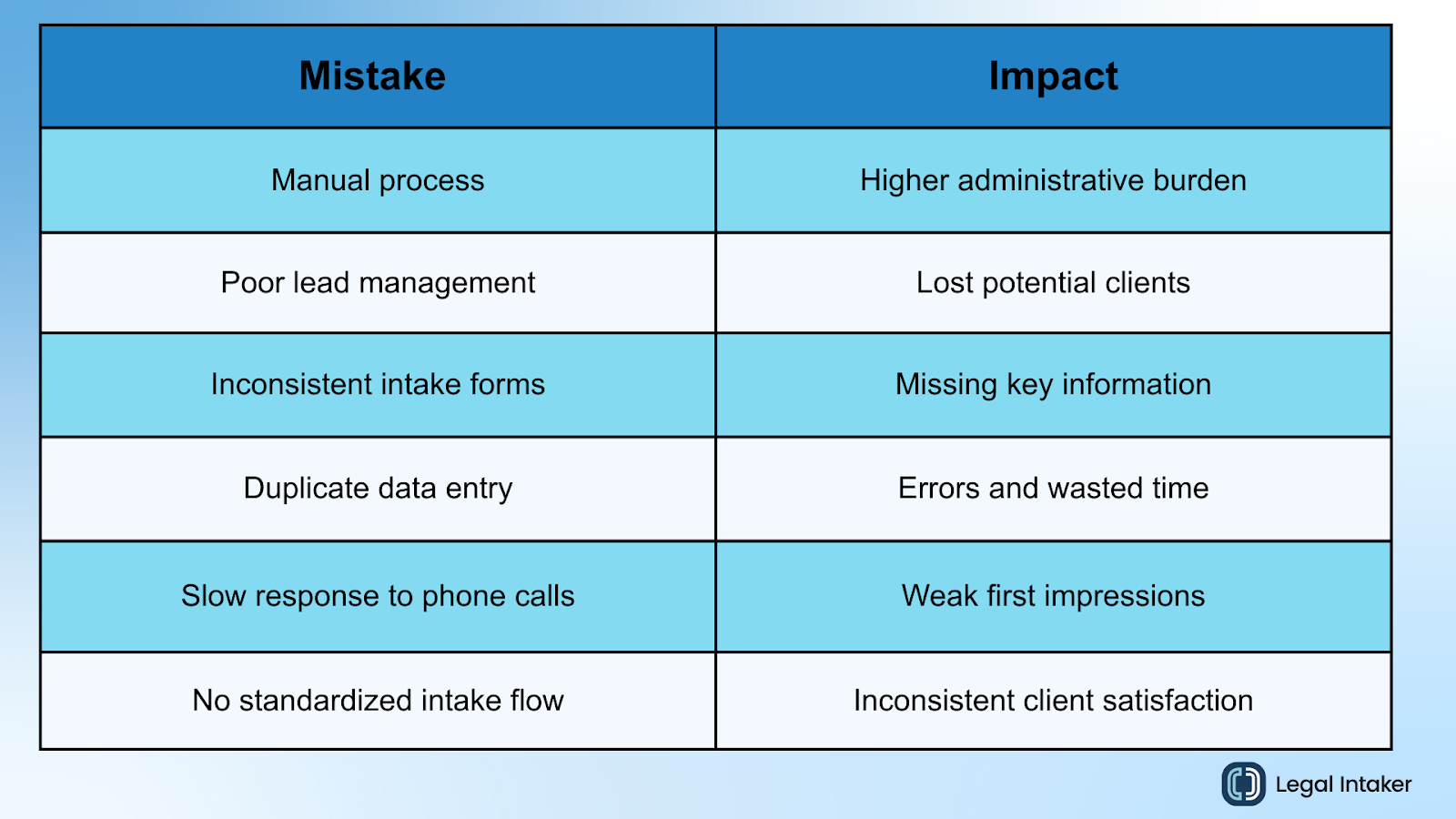
A solid intake process eliminates these issues by standardizing business processes and improving internal coordination.
How Technology Enhances the Law Firm Intake Process
Modern law firms rely on:
- Practice management software
- Case management software
- Online intake forms
- Automated systems for scheduling and reminders
- Centralized client data storage
These tools reduce data entry, improve accuracy, and create a smoother client’s journey from first contact to signed engagement.
Measuring an Effective Client Intake Process
Track these intake KPIs:
- Response time to phone calls and online forms
- Lead-to-consultation rate
- Consult-to-client conversion rate
- Intake completion accuracy
- Client satisfaction scores
An intake process that improves client satisfaction also improves firm profitability.
How Legal Intaker Supports Law Firm Client Intake
Legal Intaker helps law firms build and maintain a law firm intake system that scales without increasing overhead. Our legal intake specialists support:
- Screening prospective clients
- Managing phone calls and contact forms
- Collecting client information accurately
- Handling intake questionnaires and intake forms
- Supporting client onboarding and case management workflows
By removing intake bottlenecks, Legal Intaker helps firms enhance efficiency, save time, and convert more potential clients into new clients.
A Better Way Forward: Turn Intake Into a Growth Engine
Your legal intake process is the gateway to every client relationship your firm builds. A strong, efficient, and well-managed intake process ensures your firm captures the right cases, protects itself ethically, and delivers a better client experience from the very first interaction.
Want to streamline your firm’s client intake without adding internal workload? Talk to Legal Intaker and see how dedicated legal intake specialists can help you convert more leads, reduce administrative burden, and build a stronger intake foundation.

FAQs: Client Intake for Law Firms
What is client intake in a law firm?
Client intake is the process of collecting client information, screening prospective clients, conducting conflict checks, scheduling consultations, and onboarding new clients into the legal process.
What should be included in client intake forms?
Client intake forms should include basic contact information, practice area selection, details of the legal issue, key dates, opposing party information, and consent for communication.
How can law firms improve their client intake process?
Law firms can improve intake by using automated systems, standardizing intake forms, reducing duplicate data entry, improving phone call handling, and tracking intake performance metrics.
Why is an effective client intake process important?
An effective client intake process improves client satisfaction, protects the attorney-client relationship, reduces administrative burden, and increases conversion of potential clients into paying clients.







.png)
.png)














.webp)















.webp)

.webp)








.webp)