
Key Takeaways
- A virtual paralegal supports substantive legal drafting and trial prep after the client signs. A virtual intake specialist focuses on client acquisition before retention.
- Paralegals create revenue through billable client hours and higher case capacity. Intake specialists generate revenue by lifting lead conversion rates and stopping missed calls.
- Drafting requires hours of uninterrupted focus, while intake demands instant phone availability. Assigning both jobs to one person can lead to missed leads and delayed court deadlines.
Your phone rings at 7:40 p.m. A potential client was just rear-ended and wants to know if you can help. At the same time, a discovery deadline sits on your desk, a client file needs organizing, and three medical record requests are still waiting to go out.
These are two very different problems, and the research shows most firms struggle with both.
The two gaps costing law firms clients and capacity
On the intake side, Clio's 2024 Legal Trends Report sent secret shoppers posing as prospective clients to 500 U.S. law firms. Only 40% of firms answered the phone, down from 56% in 2019. Counting callbacks, 48% were still essentially unreachable by phone, and just 33% replied to emails.
On the casework side, the same report puts the average lawyer's utilization rate at 37%. That is just under three billable hours in an eight-hour day, with the rest lost to administrative and non-billable work.
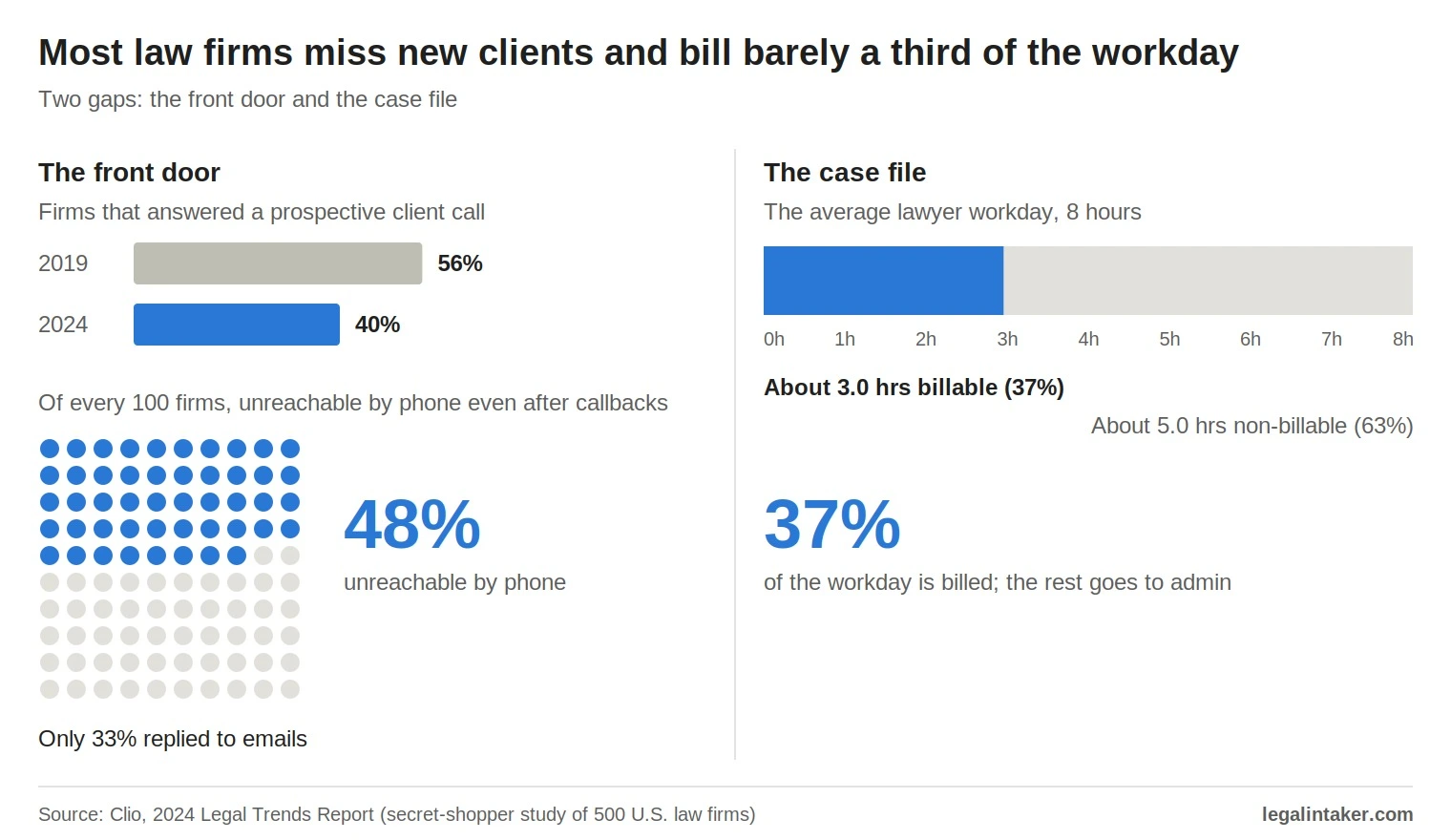
The first gap costs you new clients. The second costs you capacity on the clients you already have. Many firms try to fix both with one hire, then wonder why leads slip away or deadlines creep up.
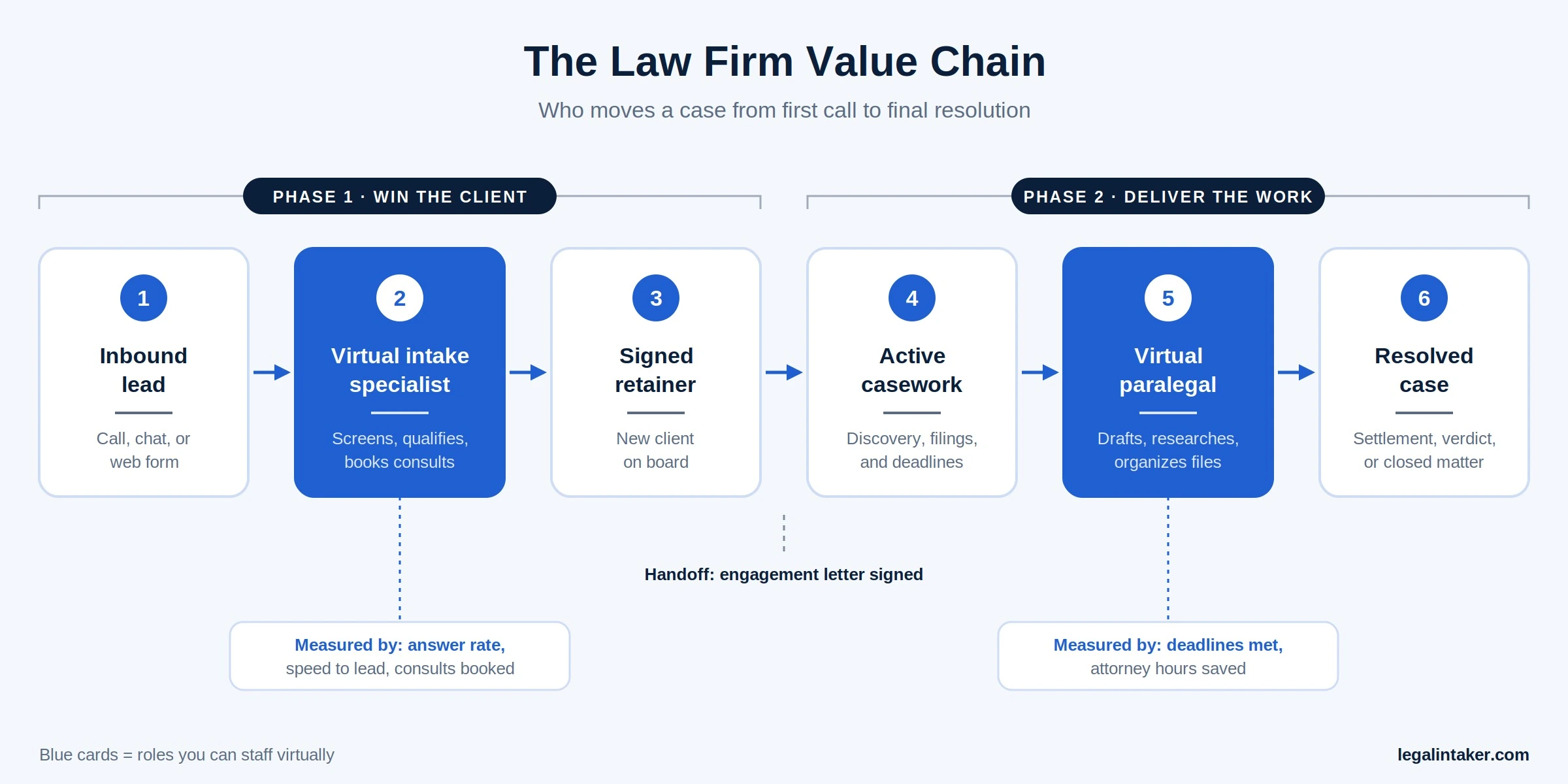
That is where the choice between a virtual paralegal and a virtual intake specialist comes in. Both are remote roles that save you the cost of in-house staff, but they sit at opposite ends of the client journey. A virtual legal intake specialist turns callers into signed clients. A virtual paralegal helps attorneys deliver the legal work once those clients are on board.
This guide breaks down what each role does day to day, the software they use, what they cost, and how to decide which one your firm needs first.
At a Glance: Side-by-Side Comparison
Neither role can give legal advice. Both work under attorney supervision, which keeps your firm aligned with professional conduct rules on supervising non-lawyer staff.
What does a virtual paralegal do?
A virtual paralegal, also called a remote paralegal, performs substantive legal work for attorneys from an offsite location. They handle the detailed, time-consuming tasks that keep a case moving, so lawyers can spend more of their day on strategy, negotiation, and court appearances.
Virtual paralegals perform substantive tasks that require formal legal training. They draft pleadings, compile responses to interrogatories, manage document productions, and conduct statutory research.
Because their work directly advances legal matters, law firms can bill paralegal time directly to clients at reasonable market rates. The American Bar Association Model Guidelines for the Utilization of Paralegal Services notes that legal assistant and paralegal time is billable when work is substantive and supervised by a licensed attorney.
Core daily responsibilities
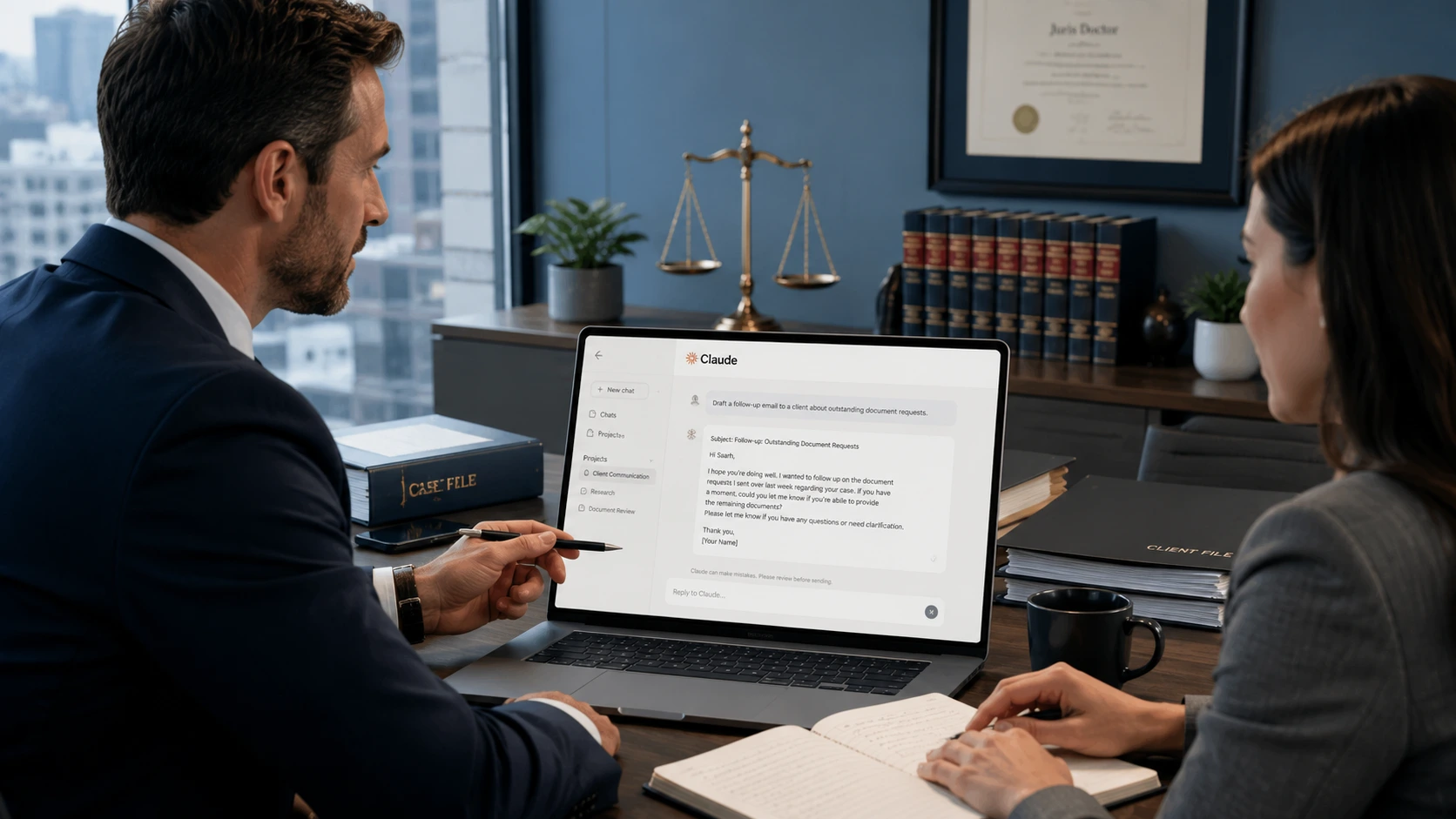
- Drafting legal documents. Pleadings, motions, discovery requests and responses, demand letters, and correspondence, all prepared for attorney review.
- Legal research. Finding case law, statutes, and regulations, then summarizing findings in memos.
- Case file management. Updating matters in the case management system, organizing exhibits, and maintaining clean digital files.
- Deadline and calendar tracking. Docketing court dates, statutes of limitation, and filing deadlines so nothing slips.
- Records and evidence gathering. Requesting medical records, police reports, employment files, and other supporting documents.
- E-filing and court submissions. Preparing and filing documents through state and federal e-filing portals.
- Client case updates. Sending status updates to existing clients and collecting documents they need to provide.
- Trial and hearing prep. Building binders, witness lists, exhibit lists, and deposition summaries.
Software a virtual paralegal typically uses: Clio, MyCase, Filevine, or PracticePanther for case management; Westlaw or LexisNexis for research; Adobe Acrobat for PDF work; Microsoft Word; and court e-filing systems such as PACER.
What does a virtual intake specialist do?
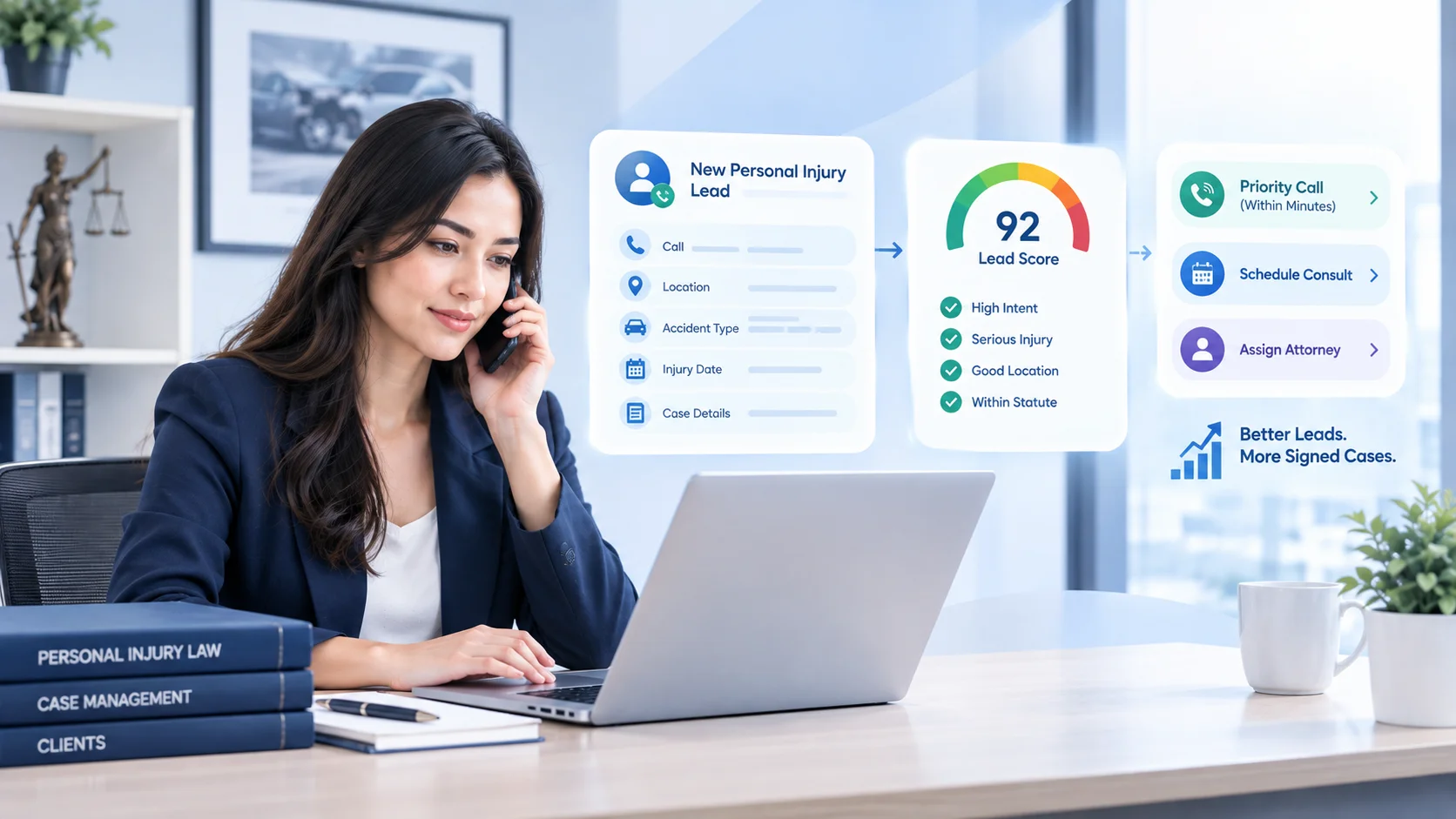
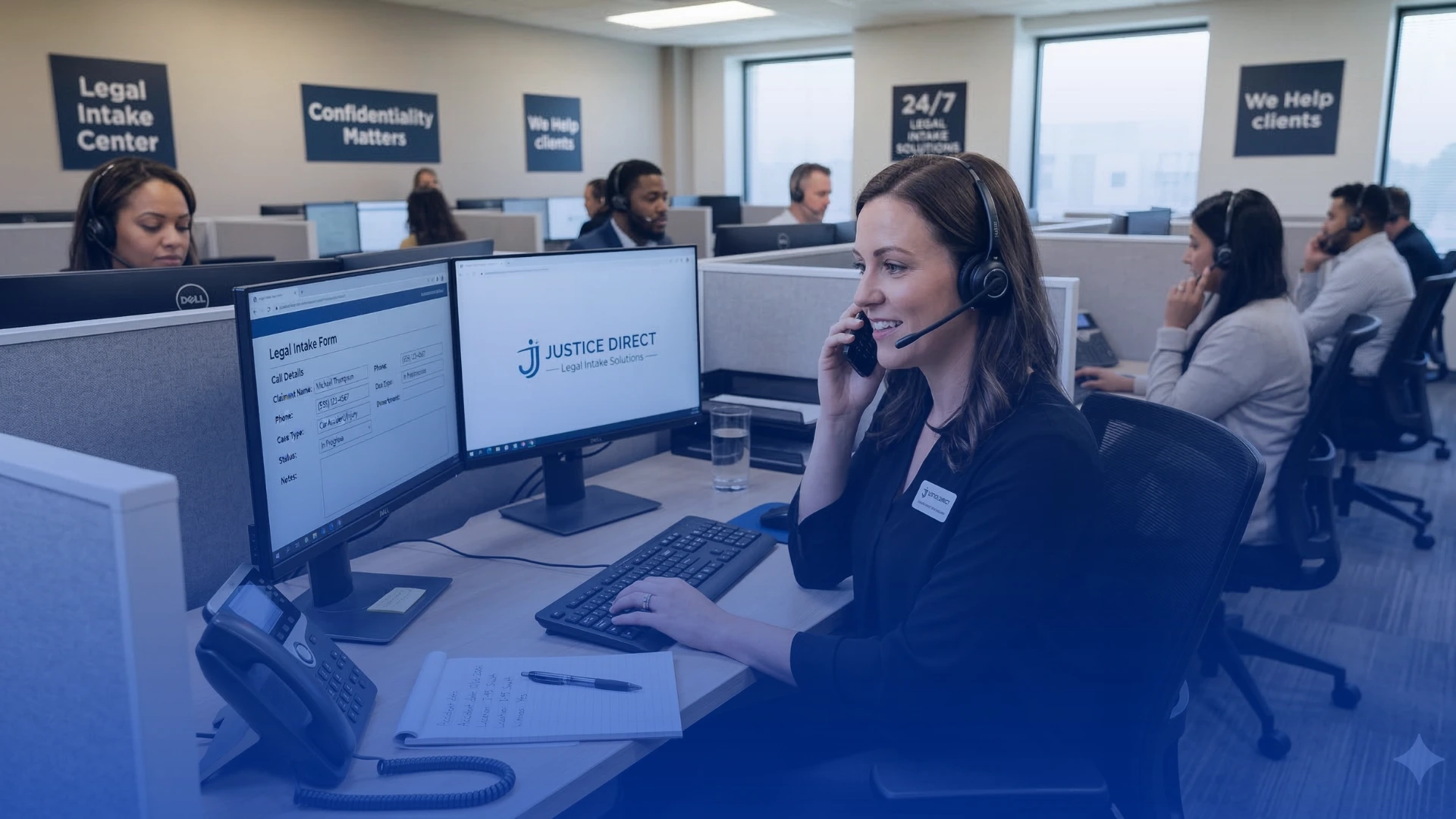
A virtual intake specialist, also called a remote intake specialist or virtual legal intake specialist, is the first voice a potential client hears when they contact your firm. Their job is to respond fast, gather the right facts, decide whether the case fits your practice, and get qualified leads onto an attorney's calendar.
This role is closer to sales and client service than to legal drafting. But a good legal intake specialist is not a generic receptionist. They understand legal terminology, know which questions reveal case merit in your practice area, and handle callers who are often stressed, injured, or scared.
Core daily responsibilities
- Answering calls, texts, and live chats. Picking up inbound inquiries quickly, including after hours and on weekends when many injured or distressed people reach out.
- Client screening. Asking structured questions to assess case type, dates, damages, liability, and conflicts.
- Lead qualification. Matching each lead to the right practice area and filtering out cases the firm does not take.
- Appointment setting. Booking consultations and sending reminders to reduce no-shows.
- Lead follow-up. Calling back missed calls, web form leads, and prospects who have not yet signed.
- CRM data entry. Logging every contact, source, and outcome so the firm can track which marketing channels work.
- Retainer and payment support. Sending engagement agreements for e-signature and collecting consultation fees.
- Bilingual intake. Serving Spanish-speaking callers, which matters in practice areas like immigration, personal injury, and workers' compensation.
Software a virtual intake specialist typically uses: CRMs and intake tools like Lead Docket, Clio Grow, Lawmatics, and Salesforce; VoIP phone systems such as RingCentral; live chat platforms; scheduling tools like Calendly; e-signature tools such as DocuSign; and payment tools like LawPay.
At Legal Intaker, intake specialists are trained by U.S.-based attorneys and work within your existing software, covering client screening, phone answering and live chat, appointment setting, and lead qualification.
Pros and cons of each role
Virtual Paralegal
Virtual Intake Specialist
Practice area priorities
Your practice area shapes which role delivers value first. High-volume, consumer-facing practices tend to feel intake pain first. Document-heavy, long-cycle practices tend to feel paralegal pain first.
How to determine which role you need right now
Start by finding where your firm is losing the most money: at the front door or inside the case file. Run through these two checklists and count which one gets more ticks.
You likely need a virtual paralegal if:
- Attorneys spend evenings drafting routine documents
- Deadlines are tracked in someone's head or a sticky note
- Records requests and discovery are falling behind
- You are turning down cases because the team has no capacity
- Existing clients complain they never get updates
- Case files are scattered across email, desktops, and paper
You likely need a virtual intake specialist if:
- Calls go to voicemail during court, lunch, evenings, or weekends
- Web form and chat leads wait hours or days for a reply
- You spend money on ads or SEO but signed cases are flat
- Attorneys spend time on calls with people who do not qualify
- You have no clear data on where leads come from or why they drop off
- You lose Spanish-speaking callers because no one can help them
If both lists feel familiar, fix intake first when revenue is the issue, and hire a paralegal first when you already have more cases than you can handle. A simple test: if you doubled your leads tomorrow, could your team work the new cases? If yes, hire intake. If not, hire a paralegal.
Can one person handle both roles?
In a very small firm with low lead volume, yes, for a while. A solo attorney getting a few inquiries a day might have one remote staff member answer calls in the morning and work on case files in the afternoon.
But the combined role breaks down quickly as the firm grows, for three reasons:
- The work pulls in opposite directions. Intake demands instant availability. Paralegal work demands long blocks of focus. Every time the phone rings mid-draft, both tasks suffer.
- Missed calls cost the most. When a paralegal is buried in discovery, the phone goes to voicemail. Many prospective clients simply call the next firm on their list.
- The skill sets differ. A great intake specialist is warm, quick, and persuasive on the phone. A great paralegal is precise and methodical in writing. Few people excel at both.
A better approach for growing firms is to separate the roles. Hire a dedicated remote legal intake specialist to own the front door, and add a remote paralegal when caseload grows. With virtual staffing, you can often afford both for less than one in-house hire. Legal Intaker also offers other virtual roles, such as legal assistants and case managers, if you want to build out the team in stages.
How remote staff stay ethical and compliant
The most common worry about hiring a remote paralegal or remote legal intake specialist is compliance. Can someone working from another city, or another country, handle confidential client information and speak with prospective clients without creating ethical risk for the firm?
What remote staff can and cannot say
The clearest line for both roles is legal advice. Neither a virtual intake specialist nor a virtual paralegal can give it. Scripts should make that line easy to follow.
When a caller asks "Do I have a case?" or "What should I do?", a trained specialist has a ready response, such as: "That's a great question for the attorney. I can get you scheduled for a consultation so they can review the details with you." That keeps the caller engaged and keeps the firm on the right side of unauthorized practice rules.
Legal Intaker specialists are trained by U.S.-based attorneys, follow confidentiality protocols that protect attorney-client privilege, and comply with HIPAA where applicable. Your firm still sets the scripts and supervises the work.
Financial considerations: Cost vs ROI
The two roles pay off in different ways. An intake specialist earns its keep through new revenue. A paralegal earns its keep through recovered attorney time and higher case capacity.
What each role costs
Hiring either role in-house means salary plus payroll taxes, benefits, equipment, office space, and recruiting time. Virtual staffing removes most of that overhead. Legal Intaker places intake specialists at flat monthly rates starting at $2,227 for English-speaking specialists, with bilingual English and Spanish professionals at an additional $300 per month, with no long-term contracts (pricing). The firm estimates up to 70% savings compared with hiring in-house intake.
Virtual paralegal rates vary more widely, depending on experience, practice area, and whether you hire through a staffing firm, a freelance marketplace, or a U.S.-based contract paralegal service.
How ROI works for each role
A virtual paralegal and a virtual intake specialist create value in different ways, so the right metrics depend on where you want to improve your firm’s workflow.
Virtual Paralegal
- Return: More billable attorney hours and more cases handled per attorney.
- Measure: Hours of drafting shifted from attorneys, deadlines met, and cases handled per attorney.
- Results: Usually visible after onboarding, once the paralegal learns your templates and workflows.
Virtual Intake Specialist
- Return: More signed cases from the same lead volume.
- Measure: Answer rate, speed to lead, consultations booked, signed cases, and cost per acquisition.
- Results: Often visible within the first month as missed calls decrease.
A simple way to run the numbers
For a paralegal, multiply the attorney hours saved each week by your billable rate. If a paralegal frees up 10 attorney hours per week and your rate is $300 per hour, that is $3,000 in weekly capacity your attorneys can put toward billable work or new cases.
For intake, take your average fee per case and multiply it by the extra cases you would sign each month from better response times. Legal Intaker reports an average 25% increase in lead conversion for its clients. If your firm signs 20 cases a month, even a handful of additional signed cases can cover the monthly cost many times over, especially in contingency practices like personal injury.
Use your own figures for fees, rates, and volume. The examples above are illustrations, not guarantees.



.png)
.png)











.webp)














.webp)

.webp)









.webp)