Key Takeaways
- A timely, specific objection in court is the foundation for excluding bad evidence and preserving error for appeal.
- Use a motion in limine to handle predictable evidentiary fights before the jury hears anything. Use trial objections to handle what motion practice did not.
- Most federal courtroom objections map to a small set of Federal Rules of Evidence (401, 403, 404, 602, 611, 701 to 703, and 801 to 807 do the heavy lifting).
- Always object on the record, name the rule, and where evidence is excluded, place an offer of proof on the record.
- This master list is organized by category, with the FRE reference and a working example for each entry.
Quick Answer
This master list covers every common courtroom objection by category and Federal Rule of Evidence, plus the motion practice and appellate preservation steps trial attorneys rely on. Litigators preparing for trial often rely on virtual legal staff to cover intake while they live in the courtroom.
The Trial Attorney's Approach To Objections
A trial attorney's approach to objections is built on three pillars: anticipate, time, and preserve. Anticipate evidentiary fights with motions in limine. Time each objection so the basis is on the record before the jury hears the answer. Preserve the error with a clean statement of grounds and an offer of proof when needed.
The strongest objection practice is also disciplined. Three-word objections beat three-sentence arguments. Save the longer record for sidebar, the next break, or a written motion.
Plan the objection script the same way you plan a witness exam. List the testimony you expect, the evidence you expect to face, and the precise objection plus FRE rule for each. The lawyers who win evidentiary fights are the ones who already know what they will say before the question is asked.
The Master List Of Objections
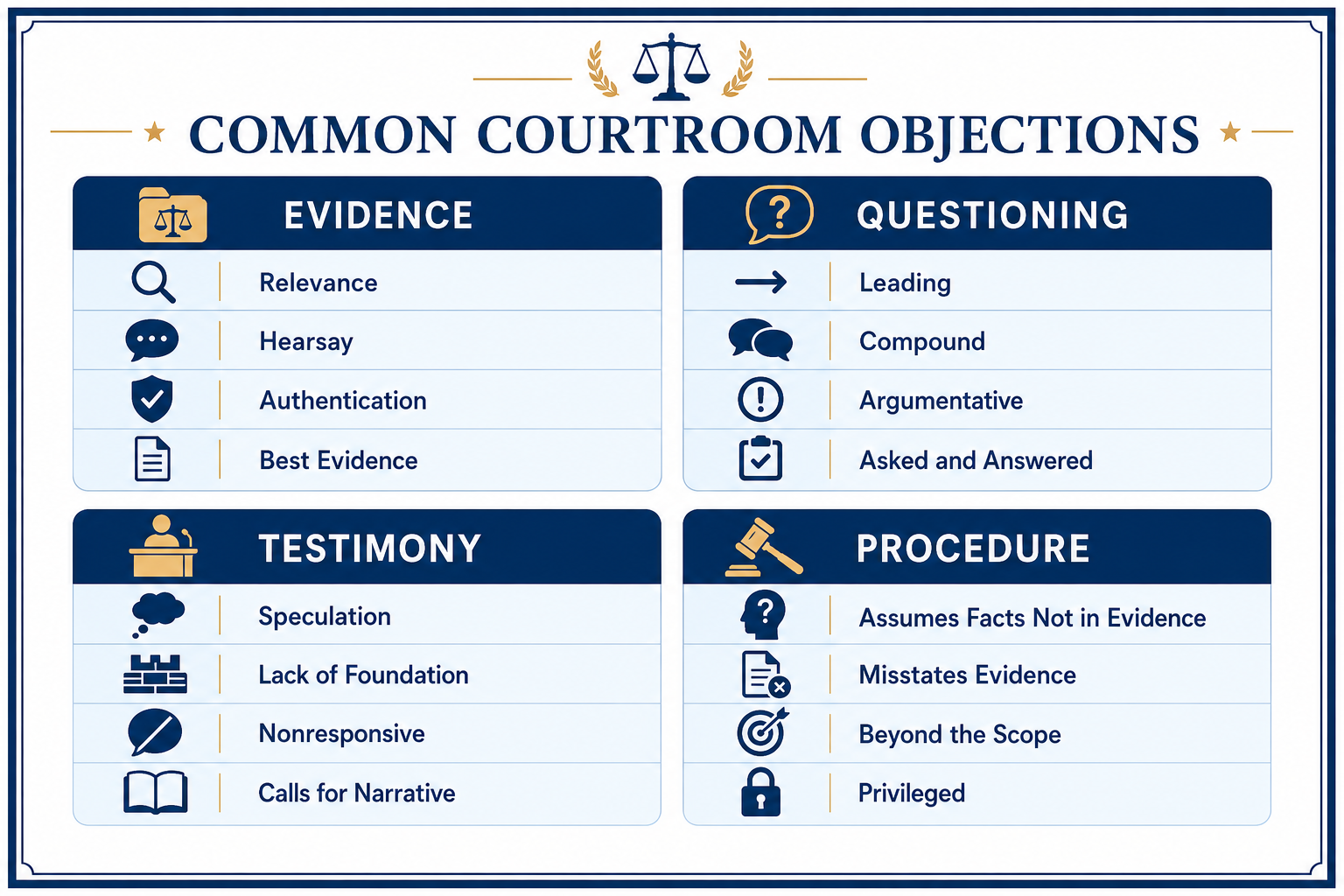
The master list below groups every common courtroom objection into eight categories. Each entry names the working objection, the Federal Rule of Evidence (or other authority), and an example phrasing.
Form Of The Question Objections
Form objections target how a question is asked. Most can be cured by rephrasing.
Foundation And Competence Objections
Foundation objections argue that the questioner has not laid the groundwork to ask the question or to admit the evidence.
Relevance And Prejudice Objections
Relevance objections challenge whether the evidence makes a material fact more or less likely.
Hearsay Objections
Hearsay objections challenge out-of-court statements offered to prove the truth of what was said.
Key Hearsay Exceptions Reference
Note the unavailability requirement difference between FRE 803 (declarant availability immaterial) and FRE 804 (declarant unavailable).
Opinion And Expert Testimony Objections
Opinion objections challenge lay witness opinion testimony or expert testimony that does not meet the rules.
Character Evidence Objections
Character objections challenge propensity evidence or improper use of prior bad acts.
Privilege Objections
Privilege objections bar testimony that falls within recognized privileges.
Procedural And Misconduct Objections
These objections target what is happening on the record beyond the questions and answers themselves.
Federal Rules Of Evidence Quick Map
The table below maps the rule numbers most trial attorneys reference daily. The full text is published by the U.S. Courts.
Most state rules of evidence parallel the FRE, with notable differences in California, New York, and Texas. Verify the local rule before relying on FRE language in state court.
Motions In Limine: Objections Before The Witness Takes The Stand
A motion in limine is the cleanest way to handle a predictable evidentiary fight. File it before trial, brief it fully, and obtain a definitive ruling that keeps inadmissible evidence away from the jury entirely.
When a motion in limine is the right tool:
- The opposing party has flagged improper evidence (prior bad acts, settlements, character)
- The exhibit's admissibility turns on a complex legal question best handled with briefing
- The mere mention of the evidence in opening would cause unfair prejudice
- The court's ruling will shape the witness order or trial themes
When a motion in limine is the wrong tool:
- The evidentiary issue depends on facts only developed at trial
- The judge has already signaled the question is one for trial
- The motion would educate the opposing party on a stronger foundation
If the court denies the motion in limine, renew the objection at trial whenever there is any doubt the pretrial ruling was definitive. Many appellate courts require a contemporaneous trial objection to preserve the issue.
Offers Of Proof: Preserving Excluded Evidence
When the court excludes evidence, place an offer of proof on the record. An offer of proof tells the appellate court what the excluded evidence would have shown and why it was admissible.
Three steps:
- Ask the court for permission to make an offer of proof outside the jury's presence.
- Describe with specificity what the witness would have said, or mark and authenticate the excluded exhibit.
- State the legal basis for admissibility, including the FRE rule and any case authority.
Without a clear offer of proof, an appellate court typically reviews the exclusion only for plain error.
Standing And Continuing Objections
A standing or continuing objection lets a trial attorney preserve a recurring objection without re-objecting each time. Use it when the same line of questioning will produce the same objection.
How to request one:
- Object the first time with specificity.
- Ask the court to grant a continuing objection on the stated basis.
- Confirm on the record that the continuing objection covers the entire line.
- Renew at the end of the line if there is any doubt the court's ruling extended.
Standing objections save time and protect the record. They do not replace timely, specific objections on new bases that arise within the same line.
Objections By Trial Stage
Objections shift in shape across the trial. The table below maps the most common categories by stage.
Tailor your pre-trial objection script to the order you expect testimony and exhibits to come in.
Objections In Depositions
Objections in federal depositions are limited by FRCP 30(c)(2). Most substantive objections are preserved for trial. Only form, foundation, and instructions not to answer based on privilege are typically raised in real time.
Best practice during depositions:
- State the objection succinctly and on the record
- Do not coach the witness through speaking objections
- Instruct the witness not to answer only for privilege, limitation imposed by the court, or to suspend for a motion under FRCP 30(d)(3)
- Use deposition designations and counter-designations to handle most substantive objections at trial
State court depositions follow each state's rules. Some allow more objections in real time than federal court.
Common Mistakes Trial Attorneys Make With Objections
Most evidentiary mistakes share the same patterns. Avoid these.
- Generic objections. "Objection, your honor" without a basis preserves nothing on appeal.
- Speaking objections in front of the jury. Argue at the sidebar. Use the jury's ears for testimony, not for your evidentiary fights.
- Missed timing. An objection after the answer often fails. Object the moment the basis is clear.
- Wrong rule. Naming hearsay when the issue is foundation muddies the record.
- Skipping the offer of proof. Without one, exclusions are very hard to win on appeal.
- Over-objecting. Constant objections frustrate the judge and signal weakness to the jury.
- Ignoring motions in limine. Predictable evidentiary fights belong before the trial starts, not in front of the jury.
A short prep block before each trial day, focused on likely objection scenarios, dramatically improves performance.
Ethics And The Record
The American Bar Association Model Rules of Professional Conduct shape how trial attorneys should object, particularly Rules 3.3 (candor to the tribunal) and 3.4 (fairness to opposing party and counsel). Objections used purely to harass, mislead, or delay can trigger sanctions and bar complaints.
Build the discipline early. State the basis, accept the ruling, place an offer of proof when needed, and keep the record clean for appellate review.
Run The Trial. Let Intake Run Itself.
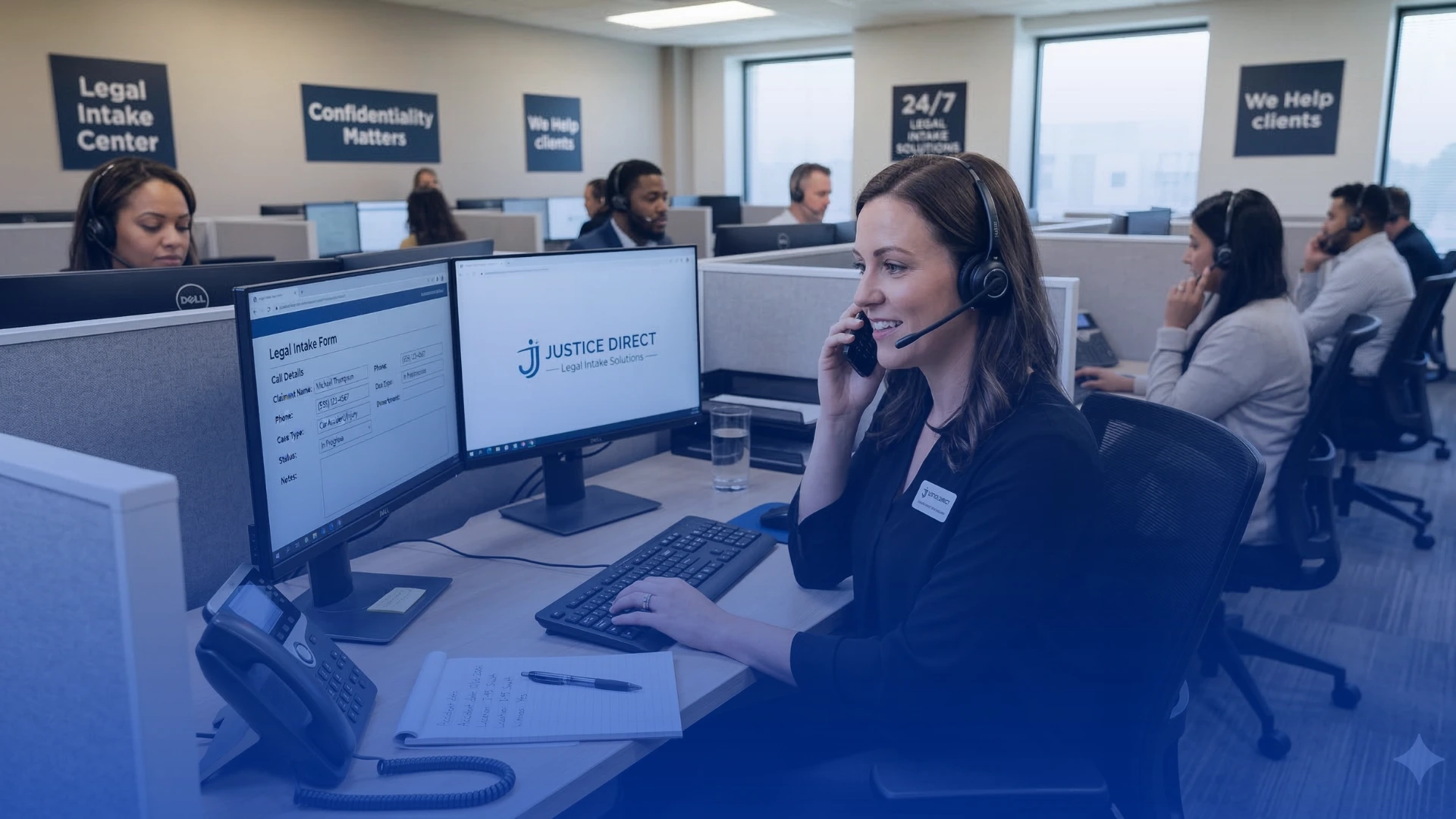
Trial weeks are when a firm's intake usually breaks. Lead times slip, voicemails pile up, and new clients move to the firm down the street that picked up first.
See how Legal Intaker pairs bilingual legal intake specialists with HIPAA-grade workflows so the moment you walk into court, every new caller still reaches a trained human who knows your firm's intake script. Review Legal Intaker pricing or book a walkthrough to see how it fits during your next trial term. Book A Consultation Today!

Frequently Asked Questions (FAQs):
What is the master list of objections in court?
The master list of objections in court groups every common objection into eight categories: form of the question, foundation and competence, relevance and prejudice, hearsay, opinion and expert testimony, character evidence, privilege, and procedural or misconduct. Each category maps to specific Federal Rules of Evidence and supports either exclusion at trial or preservation for appeal.
How does a trial attorney preserve an objection for appeal?
A trial attorney preserves an objection for appeal by stating the legal basis on the record at the time the issue arises, obtaining a ruling from the court, and, where the court excludes evidence, placing an offer of proof on the record. A general "objection" without a stated ground usually preserves nothing for appellate review.
When should a trial attorney use a motion in limine?
A trial attorney should use a motion in limine when the evidentiary fight is predictable, the legal question benefits from briefing, and the mere mention of the evidence to the jury would cause unfair prejudice. Common examples include prior bad acts, settlement discussions, and inflammatory exhibits. The motion is filed and ruled on outside the jury's presence.
What is the difference between a standing objection and a continuing objection?
The terms are often used interchangeably. Both refer to a single ruling that preserves the same objection across a recurring line of questioning, so the trial attorney does not have to re-object to every question on the same point. Make the first objection with full specificity and request the standing or continuing objection on that basis.
What is an offer of proof?
An offer of proof is the trial attorney's statement on the record of what excluded evidence would have shown and why it was admissible. It is essential for preserving the issue for appellate review. Without an offer of proof, an appellate court typically reviews the exclusion only for plain error.
Can a trial attorney object during opening or closing argument?
Yes. Common opening statement objections include argumentative content, statements of facts not in evidence, and improper appeals to emotion. Common closing argument objections include personal opinion, golden-rule arguments, vouching, and facts outside the record. Many courts grant wide latitude in closing but limits still apply.
What is a speaking objection?
A speaking objection is an objection paired with a long argument or commentary on the witness's testimony, usually made in front of the jury. Most courts disfavor speaking objections because they signal evidence to the jury or coach the witness. Argue at sidebar or in writing instead.





.png)
.png)








.webp)














.webp)

.webp)







.webp)