KEY TAKEAWAYS
- Law firms that respond to a new lead within 5 minutes are 100x more likely to make contact than those who wait 30 minutes, and outsourcing intake solves this gap at a fraction of in-house cost.
- Legal-Trained virtual intake specialists can reduce per-intake cost by up to 40% compared to hiring a full-time in-house coordinator.
- Outsourced intake teams handle after-hours leads, conflict checks, and CRM data entry consistently, covering the tasks that most internal staff let slip through the cracks.
- Legal Intaker's Pre-Vetted Talent Pool of U.S. Law Experienced virtual assistants gives firms a scalable intake solution without the overhead of permanent headcount.
Picture this: a potential client calls your firm at 7 PM on a Thursday night. They have a time-sensitive legal matter. They are ready to hire someone. But your office is closed, the call goes to voicemail, and by the next morning they have already signed with another firm.
This is not a hypothetical. It happens at law firms every single day, and most managing partners have no idea how much revenue walks out the door because of it.
That is exactly why outsourcing legal intake services has gone from a niche experiment to a mainstream operational strategy for growth-focused law firms. This guide explains what it is, why it works, what it costs, and how your firm can implement it without disrupting your current workflow.
What Outsourcing Legal Intake Actually Means
Legal intake is the complete sequence of steps that takes a stranger with a legal problem and turns them into a signed, onboarded client. It is not just answering the phone.
The full process covers:
• First contact: answering calls, web chats, and form submissions
• Lead qualification: determining whether the prospect fits your practice areas and case criteria
• Conflict checks: screening against existing clients and adverse parties
• Data collection: gathering facts, key dates, and documents needed to open a file
• Consultation scheduling: booking the prospect with the right attorney
• Follow-up: re-engaging leads who did not convert on the first contact
• CRM entry: logging all intake data accurately into your case management software
When you outsource legal intake, you are assigning some or all of these functions to a dedicated team of Legal-Trained professionals who operate outside your firm's direct payroll. The critical distinction is whether that team is Legal-Trained and U.S. Law Experienced or simply a generic call center reading from a script.
Why More Law Firms Are Making the Switch
The push toward outsourced legal intake is not a trend. It is a response to three real, measurable problems that show up in every law firm's pipeline.
The Speed-to-Lead Problem
Research published in Harvard Business Review found that companies responding to a new lead within one hour are better than those who wait even 60 minutes. The Lead Response Management study sharpened that further: firms responding within 5 minutes are than those who wait 30 minutes.
Legal consumers are shopping. They call two or three firms. The first one to call back with a real, helpful conversation usually gets the retainer.
The After-Hours Gap
A 2023 report by Martindale-Avvo found that . If your intake process stops at 5 PM, you are structurally unable to capture nearly half of your potential client pool. No amount of marketing spend fixes a closed intake pipeline.
The Staff-Mismatch Problem
When intake duties fall informally to a receptionist or paralegal, billable work gets interrupted, data entry gets delayed, and follow-up calls simply never happen. According to the 2024 Clio Legal Trends Report, attorneys spend only . Administrative tasks eat the rest. Outsourcing intake reclaims that time.
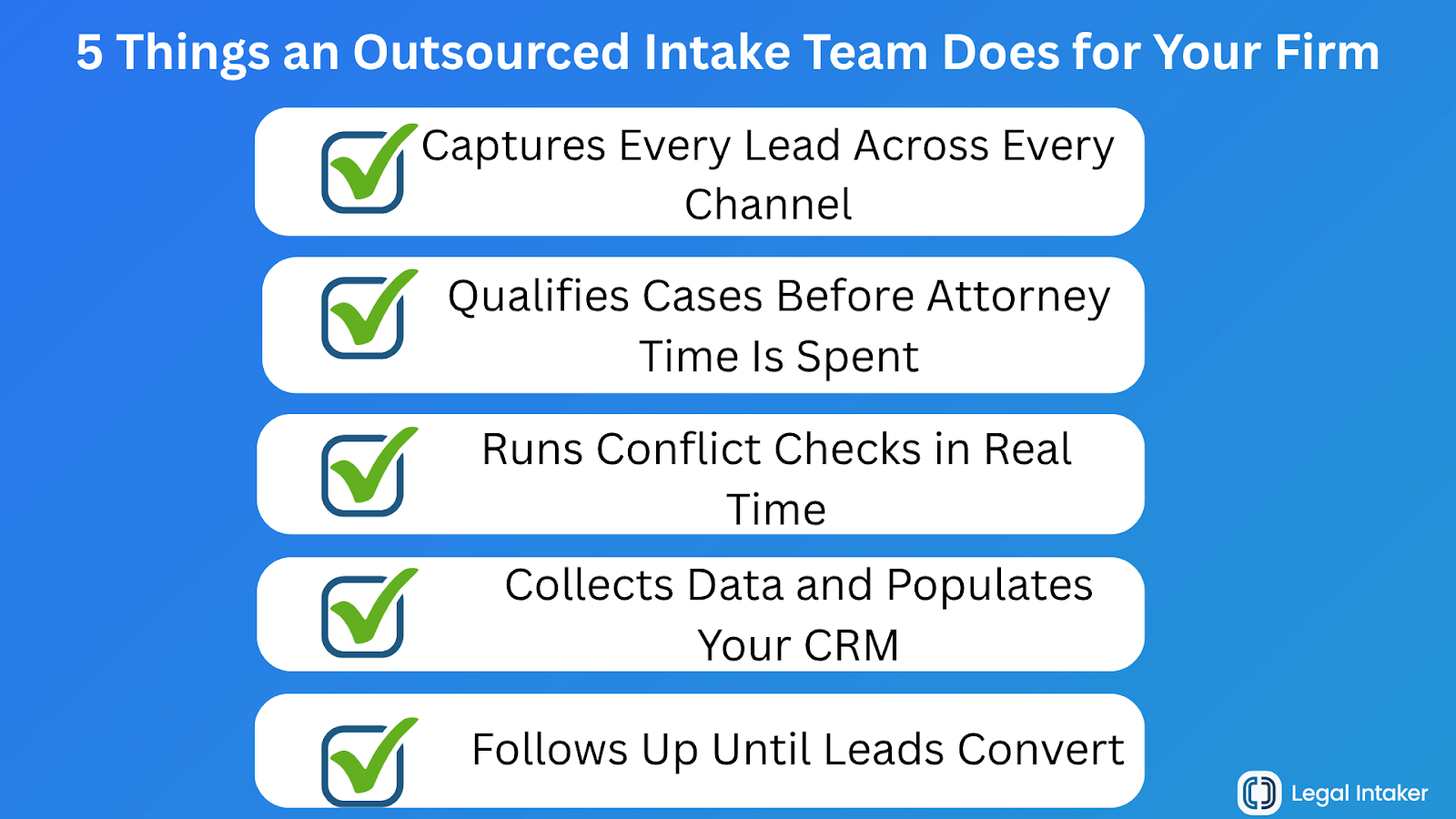
5 Things an Outsourced Intake Team Does for Your Firm
1. Captures Every Lead Across Every Channel
A qualified outsourced intake team answers calls, responds to web form submissions, handles live chat, and picks up after-hours messages. All of this happens under documented response-time SLAs so no lead sits cold because a paralegal was in a deposition or a receptionist was on another line.
For personal injury and mass tort practices especially, a response time under 5 minutes is not a preference. It is the difference between a signed case and a lost one.
2. Qualifies Cases Before Attorney Time Is Spent
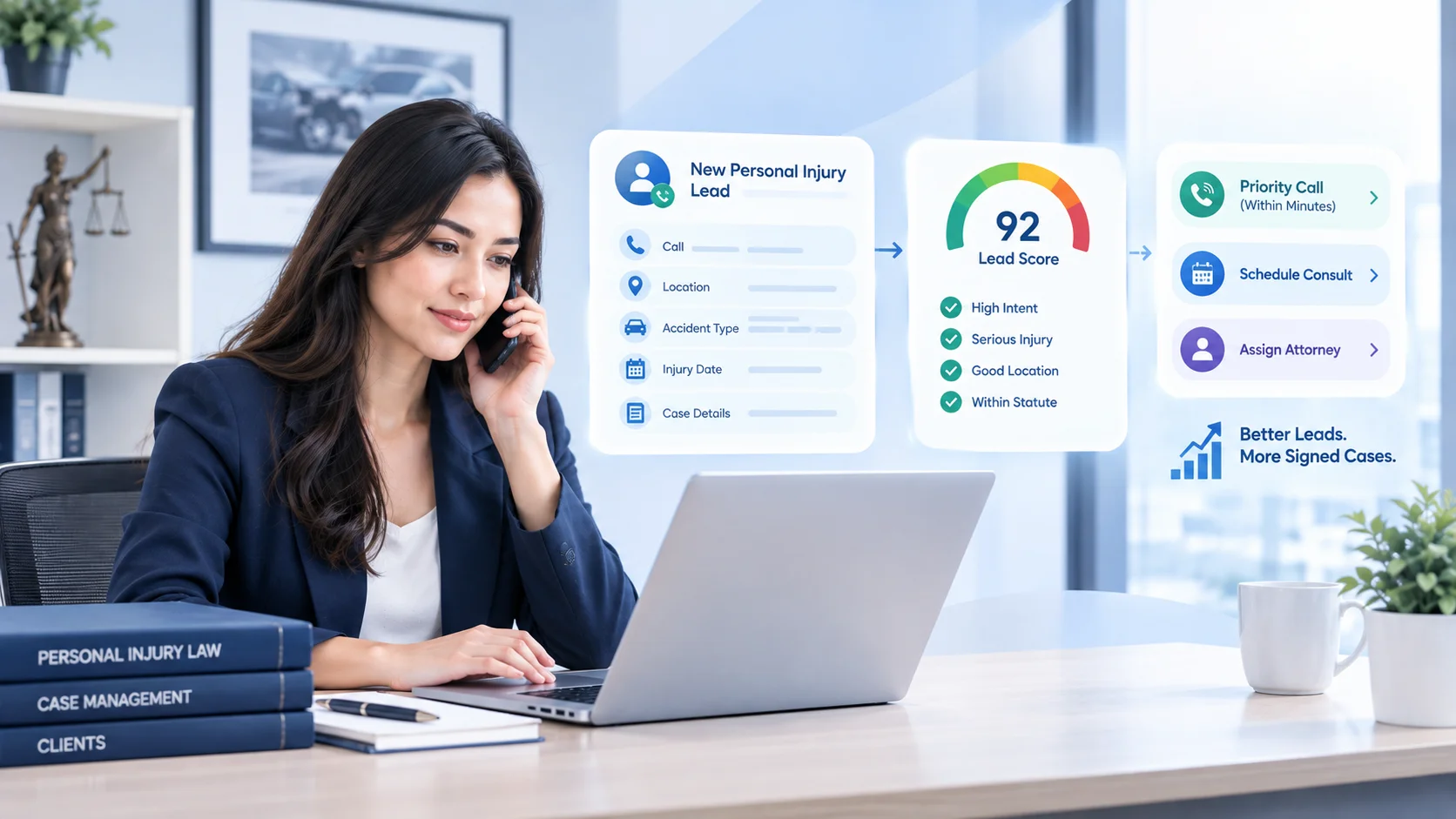
Generic call center agents read scripts. Legal-Trained intake specialists ask the right questions. They probe statute of limitations windows, liability thresholds, damages estimates, and jurisdiction issues to determine whether a prospect is genuinely worth pursuing before a single attorney minute is spent on the conversation.
A well-structured qualification call covers:
• The nature of the legal matter and applicable practice area
• Key dates, including the incident date and any applicable deadlines
• Jurisdiction and venue
• Whether the prospect has already spoken to other attorneys
• Fee arrangement awareness and ability to retain
3. Runs Conflict Checks in Real Time
Conflict checks are ethically mandatory and operationally critical. An outsourced team with access to your CRM can run conflict checks during the intake call itself, flagging issues before they become bar complaints. Internal staff frequently skip or delay conflict checks during busy periods, and that creates real malpractice exposure.
4. Collects Data and Populates Your CRM
Clean, complete intake data is the foundation of an efficient case file. An outsourced intake specialist collects client contact information, incident details, relevant documents such as police reports and medical records, insurance information, and prior counsel history. All of it goes directly into your CRM, whether that is Clio, Filevine, MyCase, or Salesforce Legal, with no lag between the call and the file.
5. Follows Up Until Leads Convert
Most leads do not sign on the first call. According to Clio's 2023 Legal Trends Report, , and a significant share of that attrition comes down to a simple failure to follow up. An outsourced intake team runs structured follow-up sequences: a same-day callback, a 48-hour email, a 7-day re-engagement. This alone can increase retainer conversion by 20 to 35%, depending on the practice area.
In-House vs. Outsourced Intake: A Side-by-Side Look
The cost savings matter. But the operational reliability is where outsourcing really earns its value. Consistent SLAs, documented protocols, and no coverage gaps from sick days or turnover mean your intake pipeline keeps running whether or not your office is fully staffed.
How Legal Intaker Virtual Staffing Model Works
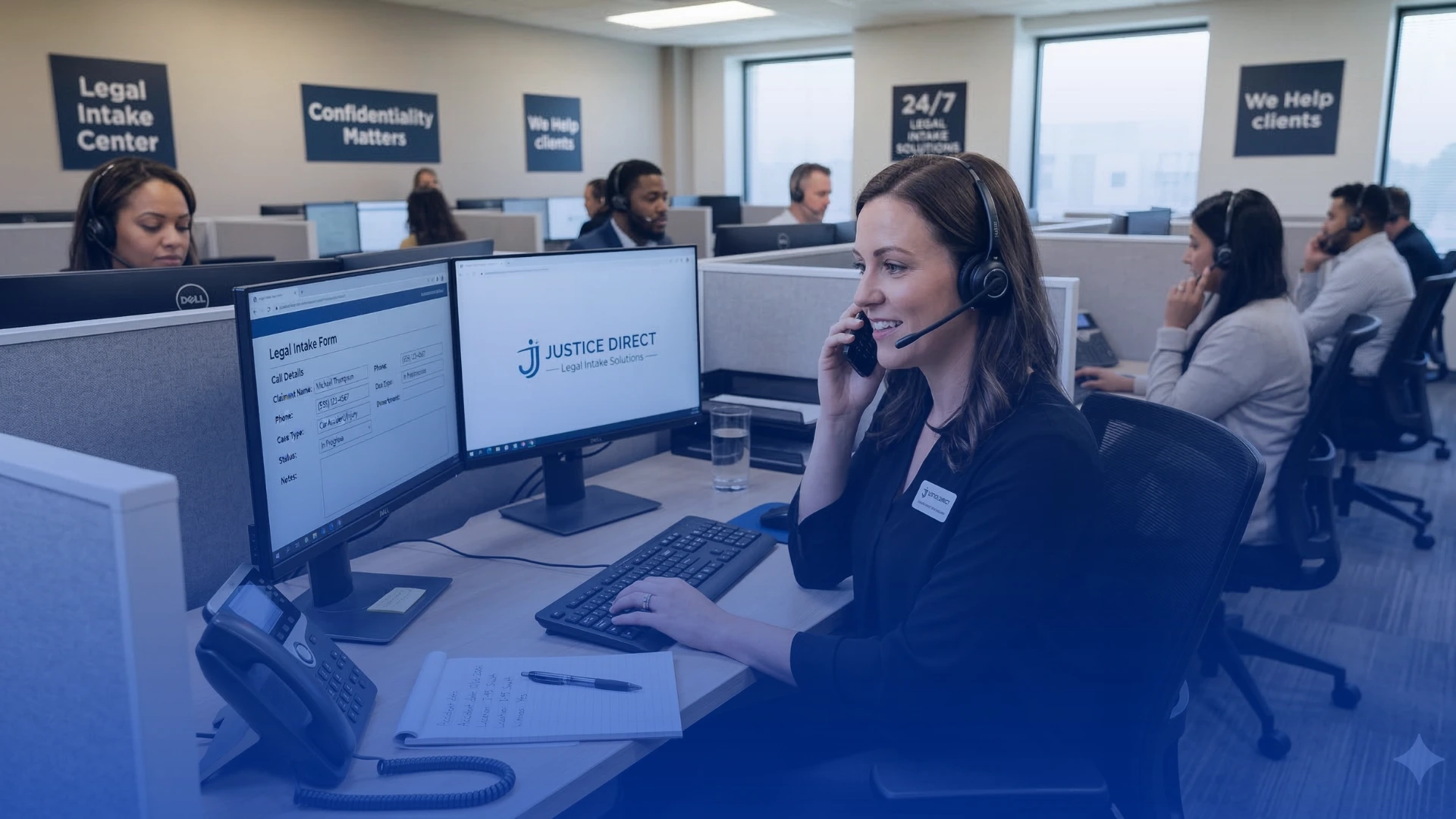
Legal Intaker.com provides law firms with dedicated Legal-Trained Virtual Assistants who function as embedded intake specialists. This is not a shared call center where your firm gets whoever is available. These are professionals assigned specifically to your firm, familiar with your practice areas, your intake scripts, and your case criteria.
Here is what separates this from a generic answering service:
• Every virtual assistant in the Pre-Vetted Talent Pool has hands-on experience with U.S. legal processes, not just general customer service skills.
• Specialists are matched to your specific practice area, whether that is personal injury, immigration, family law, or criminal defense, rather than assigned generically.
• Your firm retains full control over intake scripts, qualification criteria, and escalation protocols.
• Integration with your existing CRM and practice management software eliminates duplicate data entry entirely.
The model is also built to scale with you. Whether your firm needs one dedicated intake specialist or a team covering multiple time zones and practice areas, LegalIntaker.com adjusts the engagement to match your actual volume. You are not locked into a service tier you may outgrow in six months.
Want to see how this fits your firm? Schedule a free consultation at legalintaker.com and get a custom staffing recommendation based on your intake volume and practice areas.
Does Outsourcing Legal Intake Create Ethical Risk?
This is the question every responsible attorney asks before outsourcing any function, and it deserves a direct answer.
Properly structured outsourced intake does not violate attorney-client privilege, Model Rule 1.6, or state bar confidentiality requirements. The key word is "properly structured." The arrangement needs safeguards in place.
Required safeguards include:
• Signed confidentiality and non-disclosure agreements with all intake personnel
• Data handling protocols compliant with your state's bar ethics rules
• Clear documentation showing that intake staff operate under attorney supervision
• A defined scope of work: intake specialists gather facts and schedule consultations; they do not give legal advice
• HIPAA-compliant data handling for health-related case types, including personal injury, medical malpractice, and workers' compensation
Most state bars have issued guidance explicitly permitting outsourced legal support functions, including intake, when supervision and confidentiality are maintained. ABA Model Rule 5.3 governs supervision of non-lawyer assistants, and a properly run outsourced intake team falls squarely within that framework.
How to Make the Transition in 4 Weeks
A clean transition to outsourced intake takes two to four weeks. Here is what that looks like in practice.
Week 1: Audit your current intake process. Map every touchpoint from first inquiry to signed retainer. Be honest about where leads are lost, where data is incomplete, and where response times are too slow. You cannot fix what you have not measured.
Week 2: Build qualification scripts and criteria. Work with your outsourced team to create intake scripts tailored to each of your practice areas. Define your case acceptance criteria, disqualification triggers, and escalation paths clearly so there is no ambiguity during calls.
Week 3: Integrate your CRM and set access permissions. Grant secure, role-appropriate access to your practice management platform. Test data entry workflows from start to finish before you go live so there are no surprises on day one.
Week 4: Run a parallel test and review quality. Run the outsourced team alongside your existing process. Review call recordings, CRM entries, and follow-up execution together. Use real data to adjust scripts and protocols before you fully switch over.
Most firms complete the full transition within 30 days. The majority see measurable improvement in lead response time and retainer conversion within the first 60 days of running the outsourced team.
Stop Losing Cases to Voicemail: Your Intake Process Is a Revenue Decision
If your firm receives 100 inquiries per month and converts 20% into retained clients, improving response time and follow-up consistency alone could add 5 to 10 new cases every month without a single extra dollar in ad spend. Outsourcing legal intake is not an expense. It is a revenue infrastructure investment.
Firms that treat intake as a back-office task will keep losing cases to firms that staff it with Legal-Trained professionals, run it on documented protocols, and measure it against real SLAs. The difference between those two firms is not the marketing budget. It is a process.
Legal Intaker gives your firm that infrastructure through a Pre-Vetted Talent Pool of U.S. Law Experienced virtual assistants who handle intake from first contact to signed retainer, inside your existing systems, at a cost that beats any in-house hire. Ready to stop losing leads to voicemail? Schedule Your Free Consultation at Legal Intaker

Frequently Asked Questions
Is it ethical for a law firm to outsource legal intake to a non-lawyer?
Yes, it is. Intake specialists are not practicing law. They are gathering facts, qualifying cases, and scheduling consultations. ABA Model Rule 5.3 explicitly permits law firms to use non-lawyer assistants for these functions, as long as the supervising attorney maintains appropriate oversight and confidentiality protections are in place. Most state bars have issued guidance confirming this position.
How much does it cost to outsource legal intake services?
Outsourced legal intake typically costs between $1,500 and $3,000 per month for a dedicated virtual specialist, depending on coverage hours and the scope of duties. That compares favorably to the $4,000 to $6,000 or more per month a full-time in-house intake coordinator costs when you factor in salary, benefits, payroll taxes, and training. LegalIntaker.com uses role-based pricing matched to your firm's actual volume, so you are not paying for capacity you do not use.
What software platforms do outsourced legal intake teams use?
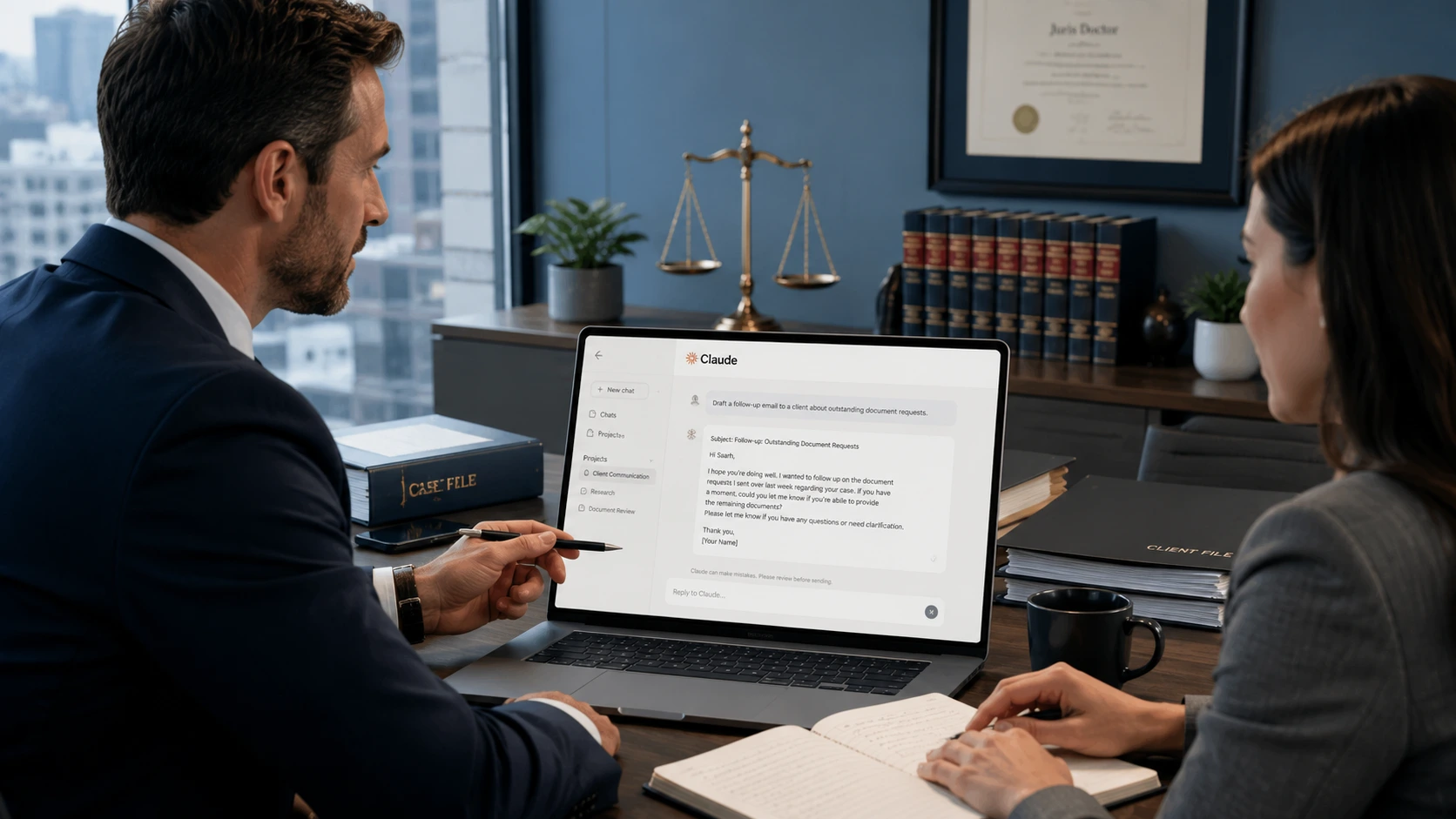
Legal-Trained virtual intake specialists work inside your existing practice management and CRM platforms, including Clio, MyCase, Filevine, Smokeball, and Salesforce Legal. They also use intake-specific tools like Lawmatics, Intaker, or LeadDocket for lead tracking and follow-up automation. The key requirement is that your outsourced team trains on your stack, not on a generic system you do not actually use.
Can an outsourced intake team handle after-hours and weekend calls?
Yes, and this is one of the primary reasons firms make the switch. A dedicated virtual intake team can be configured for extended hours, after-hours coverage, or full 24/7 operation depending on your volume and budget. Given that 42% of legal consumers contact firms outside of standard business hours according to Martindale-Avvo's 2023 research, after-hours coverage is not optional for any firm serious about growth.






.png)
.png)












.webp)













.webp)

.webp)









.webp)