.webp)
Key Takeaways
• Speed is revenue: Law firms that respond within one hour are 7× more likely to convert a new inquiry than those that wait 24 hours never let prospective clients sit without a callback (Lead Connect, 2023).
• Missed intake is a direct revenue leak: 57% of prospective clients who call a law firm never receive a return call, according to the Clio Legal Trends Report that is not a marketing failure, it is a broken intake process.
• Intake is where malpractice risk begins: Conflict-of-interest violations and missed deadlines both caught at intake are among the most common triggers of professional liability claims (ABA Profile of Legal Malpractice Claims).
• Virtual staffing fills the gap: Delegating the client intake process to trained specialists and virtual legal assistants eliminates the cost of attorney-handled intake while ensuring no new client falls through the cracks.
What Is Legal Intake?
Legal intake is the process law firms use to collect information from prospective clients, determine whether the case is a good fit, and convert qualified leads into consultations and signed clients.
It begins the moment someone calls, fills out a form, sends a text, or starts a live chat. The goal is simple: gather the right information, respond quickly, and move qualified leads toward hiring your firm.
For many law firms, legal intake is the difference between a missed opportunity and a retained client.
Why Legal Intake Matters
Most law firms spend significant money on SEO, Google Ads, referrals, and networking. But if no one responds quickly and professionally when a lead reaches out, that marketing investment is wasted.
A strong intake process helps your firm:
- Respond to leads within minutes
- Screen out unqualified cases
- Book more consultations
- Improve client experience
- Increase signed-case conversion rates
- Keep case data organized
In short, legal intake turns inquiries into revenue.
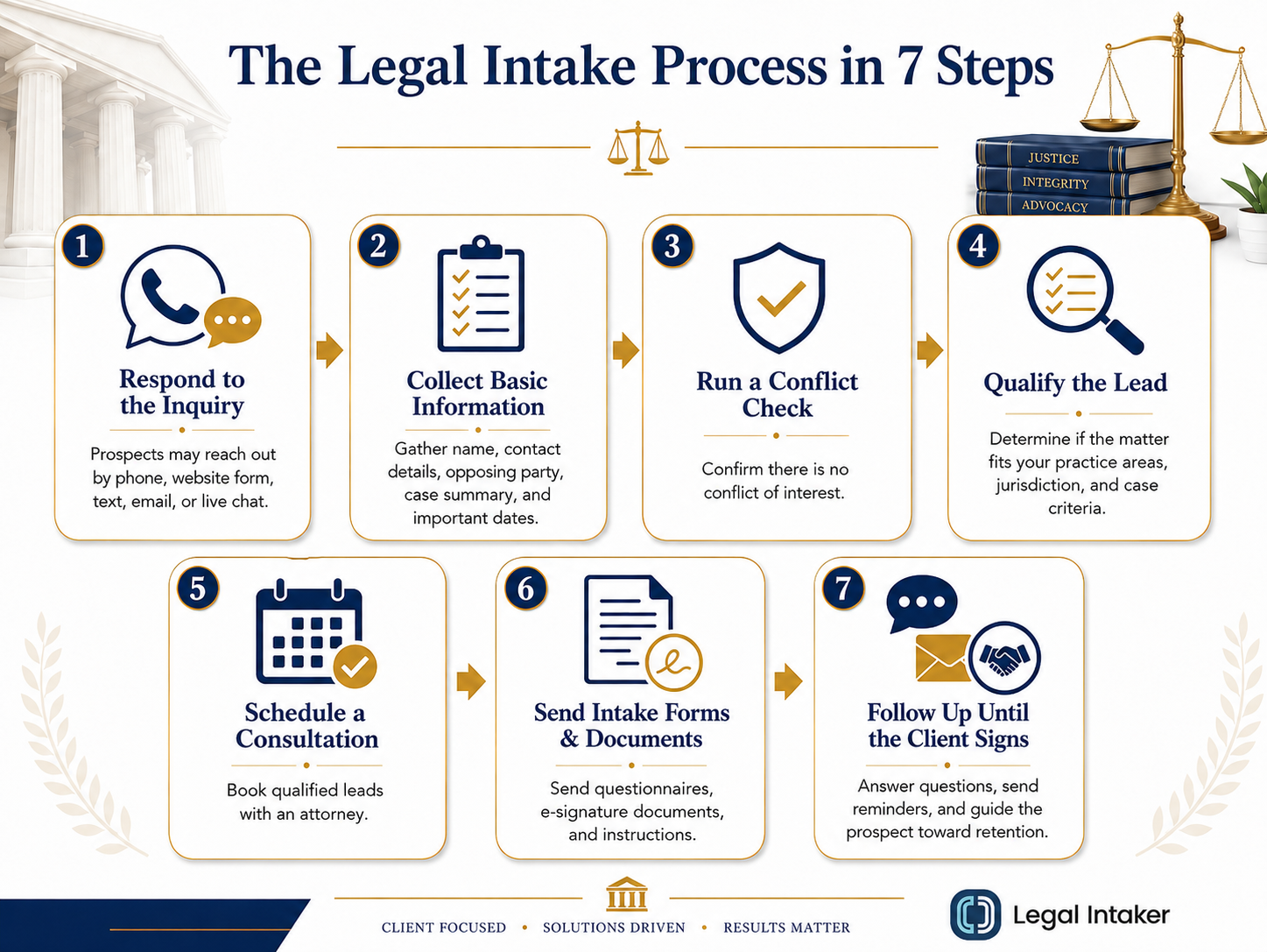
The Legal Intake Process in 7 Steps
1. Respond to the Inquiry
A prospective client may contact your firm by phone, website form, text message, email, or live chat.
2. Collect Basic Information
The intake specialist gathers:
- Name
- Contact details
- Opposing party
- Brief case summary
- Important dates
3. Run a Conflict Check
The firm confirms there is no conflict of interest.
4. Qualify the Lead
The intake specialist determines whether the matter fits your practice areas, jurisdiction, and case criteria.
5. Schedule a Consultation
Qualified leads are booked with an attorney.
6. Send Intake Forms and Documents
The client receives questionnaires, e-signature documents, and instructions.
7. Follow Up Until the Client Signs
The intake team answers questions, sends reminders, and helps move the prospect toward retention.
Legal Intake vs Client Intake
The terms are often used interchangeably, but they can refer to slightly different stages.
Both are critical to a smooth client experience.
Legal Intake vs Legal Answering Service
Not all services that answer calls actually perform intake.
A legal answering service takes messages. A legal intake specialist actively helps convert leads into clients.
What Does a Legal Intake Specialist Do?
A legal intake specialist is trained to handle the first interaction with prospective clients.
Typical responsibilities include:
- Answering calls and online inquiries
- Gathering case information
- Running conflict checks
- Qualifying leads
- Scheduling consultations
- Sending intake forms
- Following up with prospects
- Updating systems such as entity["software","Clio","legal software"], entity["software","MyCase","legal software"], and entity["software","Filevine","legal software"]
They combine customer service skills with legal workflow knowledge.
Common Practice Areas That Benefit from Legal Intake
Legal intake is important in nearly every practice area, especially those with high lead volume and time-sensitive matters. These are some of the areas where a strong intake process can make the biggest impact.
- Personal Injury: Personal injury firms often receive urgent calls after accidents, and quick intake can help secure the client before they contact another attorney.
- Family Law: Divorce, custody, and support matters are emotionally sensitive, so compassionate and organized intake helps build trust from the first conversation.
- Immigration Law: Immigration cases involve detailed timelines, forms, and deadlines, making accurate intake essential for collecting complete information.
- Criminal Defense: Prospective clients usually need immediate legal help, and a fast response can be the deciding factor in whether they retain your firm.
- Employment Law: Intake specialists help gather facts about discrimination, harassment, wage disputes, and wrongful termination to determine whether a case is viable.
- Estate Planning: Structured intake ensures the firm collects family details, asset information, and planning goals before the attorney meeting.
- Bankruptcy: Bankruptcy intake requires collecting financial information, debts, and income details to assess eligibility and prepare for filing.
- Workers' Compensation: Accurate intake helps document injury dates, employers, insurance carriers, and treatment history.
- Social Security Disability: Intake specialists gather medical and employment information needed to evaluate eligibility and prepare applications or appeals.
In competitive practice areas, the firm that responds first and asks the right questions often wins the client.
What Law Firms Get Wrong About Intake
Many firms lose qualified leads because their intake process is inconsistent.
Common mistakes include:
Slow Response Times
If a prospect waits hours for a response, they may contact another attorney.
Incomplete Questioning
Missing key details makes it harder to qualify the case.
No Follow-Up
Many prospects need multiple touchpoints before they commit.
Poor Data Entry
Incorrect or incomplete records create downstream issues.
No Performance Tracking
Without metrics, firms cannot identify bottlenecks.
Legal Intake KPIs Every Law Firm Should Track
The most successful firms measure intake performance.
Tracking these numbers helps firms improve marketing ROI and signed-case volume.

How Legal Intake Improves Law Firm Revenue
A better intake process can increase:
- Lead-to-consultation rate
- Consultation attendance
- Retainer conversion
- Average revenue per lead
For example, if your firm receives 100 leads per month and improves conversion from 10% to 15%, that is a 50% increase in signed clients without increasing advertising spend.
Legal Intake Software and Tools
Most firms use legal practice management software to organize intake data.
Popular tools include:
- Clio is one of the most widely used legal practice management platforms, offering case management, billing, document storage, and client communication tools in one system.
- MyCase is known for its user-friendly interface and built-in payment processing, making it a popular choice for solo attorneys and small law firms.
- Filevine is designed for high-volume and complex litigation practices, with customizable workflows, reporting, and collaboration tools.
- Litify is built on the Salesforce platform and offers advanced customization for firms that need enterprise-level case management and analytics.
- Lawmatics focuses on client intake, CRM, and marketing automation to help law firms capture and nurture leads more efficiently.
These platforms help manage:
- Intake forms
- Scheduling
- Automation
- Follow-up workflows
- Reporting
Software is valuable, but it works best when trained professionals enter accurate information.
In-House vs Remote Legal Intake Specialists
Law firms can hire intake specialists in-house or remotely.
In-House Staff
Pros:
- On-site presence
- Direct supervision
Cons:
- Higher payroll costs
- Recruiting and training burden
- Benefits and office overhead
Remote Legal Intake Specialists
Pros:
- Lower cost
- Legal-specific training
- Fast onboarding
- Flexible scheduling
Cons:
- Requires clear workflows and communication
Many firms now use remote legal intake specialists to reduce costs while maintaining professional client service.
How Legal Intaker Helps Law Firms
Legal Intaker connects law firms with trained legal intake specialists who understand law firm workflows and popular legal software.
Our specialists can:
- Answer calls and web inquiries
- Qualify leads
- Schedule consultations
- Follow up with prospects
- Update case management systems
- Support your intake process from day one
This allows attorneys to focus on practicing law while ensuring no qualified lead is overlooked.
Signs Your Law Firm Needs Better Intake
Your firm may need a stronger intake process if:
- Calls go to voicemail
- Leads are not followed up consistently
- Consultations are not getting booked
- Marketing costs are rising but signed cases are flat
- Attorneys are handling intake themselves
- Case data is incomplete or inconsistent
Improving intake is often one of the fastest ways to increase revenue.
Best Practices for Legal Intake in 2026
To build a high-performing intake system:
- Respond to every lead quickly.
- Use a standardized intake script.
- Train staff to qualify cases consistently.
- Automate reminders and follow-ups.
- Track key performance metrics.
- Review call recordings.
- Continuously refine your process.
Final Thoughts
Legal intake is more than answering the phone. It is a structured process that determines whether your marketing efforts turn into paying clients.
When your firm responds quickly, asks the right questions, and follows up consistently, you create a better experience for prospective clients and increase the number of cases you sign.
If your attorneys are overwhelmed or your staff cannot keep up, a trained remote intake specialist can help.
Book a consultation with Legal Intaker to learn how trained legal intake specialists can help your firm respond faster, qualify better leads, and convert more inquiries into signed clients.

Frequently Asked Questions
What is the purpose of legal intake?
Legal intake helps law firms collect case information, screen prospective clients, and move qualified leads toward hiring the firm. It creates a structured process that improves response times and conversion rates.
What is the difference between legal intake and client intake?
Legal intake usually refers to the early stage of screening and qualifying new leads. Client intake often refers to onboarding tasks after the client has decided to retain the firm.
Why is legal intake important?
Legal intake ensures that every lead receives a timely and professional response. This helps law firms reduce missed opportunities and increase signed-case volume.
Can software replace a legal intake specialist?
Software helps organize information and automate tasks, but it does not replace human judgment and relationship-building. Skilled intake specialists ask better questions and guide prospects through the hiring process.
What is a good legal intake response time?
Many high-performing firms aim to respond to new leads in under five minutes. Faster response times often lead to higher consultation and retention rates.


.png)
.png)














.webp)
















.webp)









.webp)