
Key Takeaways
- A legal answering service is a trained team that answers calls for a law firm, screens leads, completes intake forms, and hands qualified callers to the attorney.
- The best providers offer 24/7 coverage, bilingual support, conflict checks, and direct integration with Clio, MyCase, Filevine, or Litify.
- A legal answering service is different from a generic answering service because agents are trained in intake language, confidentiality, and practice-area basics.
- Most firms see ROI when even one new case per month is captured that would have otherwise gone to voicemail.
Quick Answer
Answering legal calls means having trained receptionists handle every client call, screen intake, and route qualified leads to your firm, 24/7. It protects revenue that voicemail usually loses. Learn more about professional legal call handling and how it works.
What Is A Legal Answering Service?
A legal answering service is a call-handling team trained specifically for law firms. Agents pick up your phones live, use your intake script, capture client details, run a conflict check, and either transfer the caller or schedule a consultation.
General answering services just take messages. Legal answering services act like a remote intake department. They understand the vocabulary of personal injury, family, immigration, criminal, and estate law, and they follow attorney-client confidentiality rules.
The service usually operates behind a local or toll-free number forwarded from your office line. Calls feel like they land inside the firm, which keeps your brand consistent.
How Legal Answering Services Work
Legal answering services work in four steps: answer live, qualify the caller, log intake into your CRM, and hand off to the attorney. Everything happens under a script your firm approves.
Call Answering And Screening
Trained agents answer in your firm's name within a few rings. They greet the caller, confirm the matter type, and apply your qualification criteria, such as jurisdiction, statute of limitations, or minimum case value.
Intake Form Completion
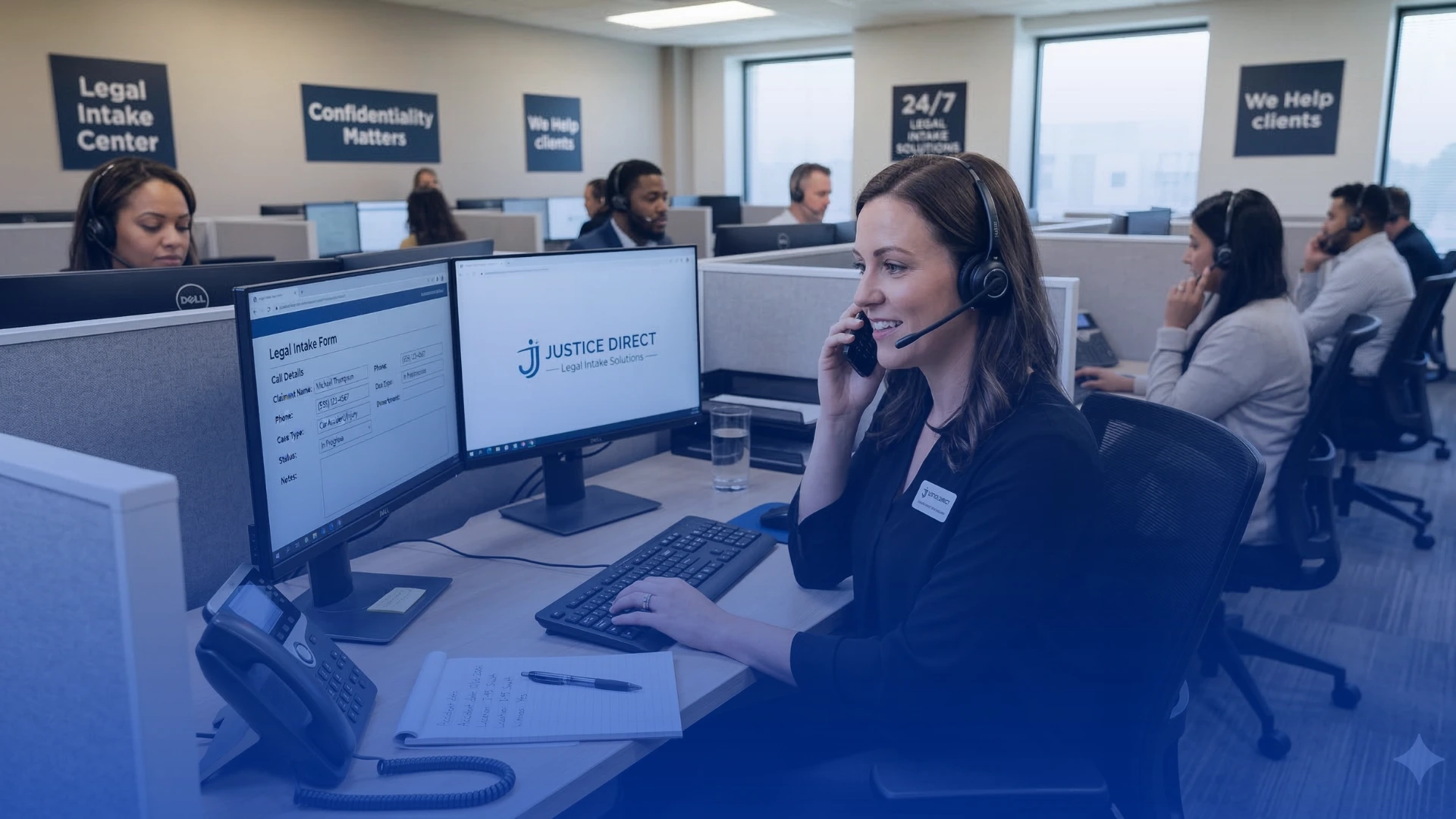
Agents complete your intake form on the call, field by field. They capture the caller's name, contact details, opposing parties for conflict checks, and a short fact summary of the matter.
CRM Entry And Handoff
The completed intake drops directly into your case management system, such as Clio, MyCase, Filevine, or Litify. Qualified leads get a warm transfer to an available attorney or a booked consultation on the calendar.
Follow-Up And Reporting
Good providers also send a call summary by email or SMS, record the call for your review, and deliver weekly reporting on lead volume, conversion, and call quality.
Benefits Of A Legal Answering Service
The benefits of a legal answering service come down to capturing more qualified leads, freeing attorneys from phone duty, and giving clients a professional first impression.
- Captures after-hours and weekend leads that voicemail loses
- Keeps attorneys focused on billable work instead of cold calls
- Reduces missed-call anxiety for clients in urgent legal situations
- Adds a bilingual (usually Spanish) channel for firms that need it
- Produces clean, searchable intake records for marketing analysis
- Lowers overhead compared with a full-time in-house receptionist
The business case is simple. If your firm's average case value is even a few thousand dollars, missing one new client per month often costs more than a year of service fees.
Features To Look For In A Legal Answering Service
Not every legal answering service is built the same. These are the features that separate the strong providers from the ones that will cost you leads.
- 24/7 live coverage, including nights, weekends, and holidays
- US-based, legally trained intake specialists (not overseas generic agents)
- Bilingual Spanish support for firms in immigration, PI, and family law
- Conflict checks run in real time, before the caller is committed
- CRM integration with Clio, MyCase, Filevine, Litify, or Salesforce
- Custom intake scripts specific to each practice area you handle
- Appointment scheduling directly into your attorneys' calendars
- Call recording and transcripts for quality review and training
- Reporting dashboards with lead volume, source, and conversion data
- HIPAA-aware handling for firms that see medical information in PI cases
Ask for a live demo of the agent dashboard and sample call recordings before you sign anything.
Legal Answering Service Pricing And Plans
Most providers use one of three pricing models. The right one depends on call volume and how deep the intake work goes.
These ranges are based on publicly available pricing from major U.S. legal answering service providers as of 2026. Actual rates may vary depending on service scope, call volume, and customization.
Price is only part of the decision. A lower-cost provider that mishandles a qualified lead can cost your firm far more than it saves. Always compare what is included in the base rate, especially intake quality, responsiveness, and lead handling.
In-House Receptionist Vs Legal Answering Service
A full-time receptionist and a legal answering service solve overlapping problems. The comparison below helps small and mid-size firms decide which fits better.
Larger firms often use both. The in-house receptionist covers daytime walk-ins, and the legal answering service covers overflow, nights, and weekends.
When Does Your Law Firm Need A Legal Answering Service?
Your law firm likely needs a legal answering service if you recognize two or more of these signals. The sooner a firm plugs the leak, the more revenue it keeps.
- Voicemails from new callers going unreturned within 4 hours
- Attorneys answering their own phones during depositions or court
- High ad spend on PPC or TV with unclear lead tracking
- Weekend or evening calls from urgent matters (DUI, domestic, ER injuries)
- Spanish-speaking callers hanging up before intake
- Receptionist turnover or coverage gaps during lunch and PTO
According to the Clio Legal Trends Report 2024, response speed plays a major role in whether potential clients choose a law firm. Firms that respond quickly are more likely to convert inquiries into signed clients.
How To Choose The Right Legal Answering Service
Choose a legal answering service by matching its coverage, training, and integrations to the way your firm actually runs intake. The cheapest provider is rarely the best fit.
- List your practice areas and intake fields. Ask providers to show you how they would script them.
- Test the team. Call the provider's own line after hours. If they do not answer their own phones live, walk away.
- Check the integrations. Confirm direct API support for your case management software, not a generic Zapier workaround.
- Request sample call recordings. Listen for tone, accuracy, and whether the agent sounds like part of your firm.
- Confirm data security. Ask where calls are recorded, how long transcripts are stored, and how agents are trained on confidentiality.
- Review the reporting. Ask for a real dashboard, not a PDF summary at month-end.
Treat the provider like a vendor extension of your firm, because that is how every caller will see them. Many firms benefit from pairing answering coverage with a dedicated intake specialist team that handles qualification and follow-up.
Common Mistakes Law Firms Make With Answering Services
Law firms most often fail with answering services by handing over the phones without a clear script, a clear handoff process, or a clear feedback loop.
- Skipping a kickoff call to train agents on your practice areas
- Setting up forwarding but leaving the intake form empty
- Not reviewing weekly reports for dropped or unqualified calls
- Treating the service as permanent voicemail instead of true intake
- Ignoring Spanish-speaking callers because the script is English-only
Fixing these five mistakes alone usually doubles the value most firms get from their provider.
Compliance And Confidentiality Notes
Answering legal calls comes with ethics obligations that general call centers rarely consider. Attorneys stay responsible for client confidentiality even when a third party handles the phones.
The American Bar Association Model Rules of Professional Conduct require lawyers to make reasonable efforts to protect client information shared with non-lawyer assistants, including outside vendors. A qualified legal answering provider signs confidentiality agreements, trains agents on privilege, and limits access to call data. Review your state bar's opinion on outsourced intake before you launch.
Never Miss Another Qualified Caller
Every unanswered call is a lead walking toward a competitor. A strong legal answering partner protects your marketing spend, covers your nights and weekends, and hands attorneys cleaner case files.
See how Legal Intaker pairs trained intake specialists with direct case management integrations so your firm can focus on practicing law, not chasing missed calls. Book a consultation today!

FAQs About Answering Legal Calls
What is the difference between a legal answering service and a general answering service?
A legal answering service uses agents trained in law firm intake, legal vocabulary, conflict checks, and attorney-client confidentiality. A general answering service takes messages for any industry and usually cannot qualify a legal caller or complete a proper intake form.
Are legal answering services HIPAA compliant?
Many legal answering services are HIPAA-aware rather than formally HIPAA-certified, since law firms are not always covered entities. Personal injury and medical malpractice firms should still ask for a signed business associate agreement and confirm how health information is handled.
Do legal answering services work after hours and on weekends?
Yes. Most reputable legal answering services offer 24/7, 365-day coverage, including nights, weekends, and major holidays. This is often the main reason law firms hire them, since urgent matters like DUIs, domestic issues, and injuries rarely happen during business hours.
Can a legal answering service integrate with my case management software?
Most established providers integrate directly with Clio, MyCase, Filevine, Litify, and Salesforce. The best setups send completed intake forms straight into the matter record, with call recordings and transcripts attached, so attorneys have the full context.
How much does a legal answering service cost on average?
For small and mid-size law firms, legal answering services typically cost between $200 and $900 per month, depending on call volume and the depth of intake work. Per-minute pricing usually runs $1.25 to $3.00. Enterprise firms with multiple offices can pay $1,500 or more monthly for custom plans.
Will callers know they are talking to an answering service?
Not if it is set up correctly. Professional providers answer in your firm's name, follow your script, and use your branding across call summaries and emails. Most callers simply think they are speaking with the firm's front desk.
.png)

.png)












.webp)













.webp)

.webp)









.webp)