Key Takeaways
- Missed client calls are a revenue problem, not an inconvenience ,every unanswered phone call during and outside traditional business hours is a prospective client walking to your competition.
- Not all legal intake services are built the same: the gap between a general answering service and a dedicated legal intake team shows up directly in your new client intake conversion rate.
- Law firms in personal injury, family law, immigration law, and mass tort need 24/7 intake coverage , more than 40% of client calls arrive outside standard business hours.
- Virtual legal intake specialists deliver the accountability of an in-house hire with the cost structure of a cost-effective solution, purpose-built for law firm owners who want to scale without adding overhead.
Your Phone Is Your Most Important Business Development Tool Treat It That Way
Law firms invest heavily in legal marketing. Agencies run paid search campaigns, optimize for local SEO, build content strategies, and spend real budget driving qualified leads to a firm's website. And then for a significant share of those inbound phone calls no one picks up.
That's not a marketing failure. That's a legal intake failure. And it's costing law firm owners far more than they realize.
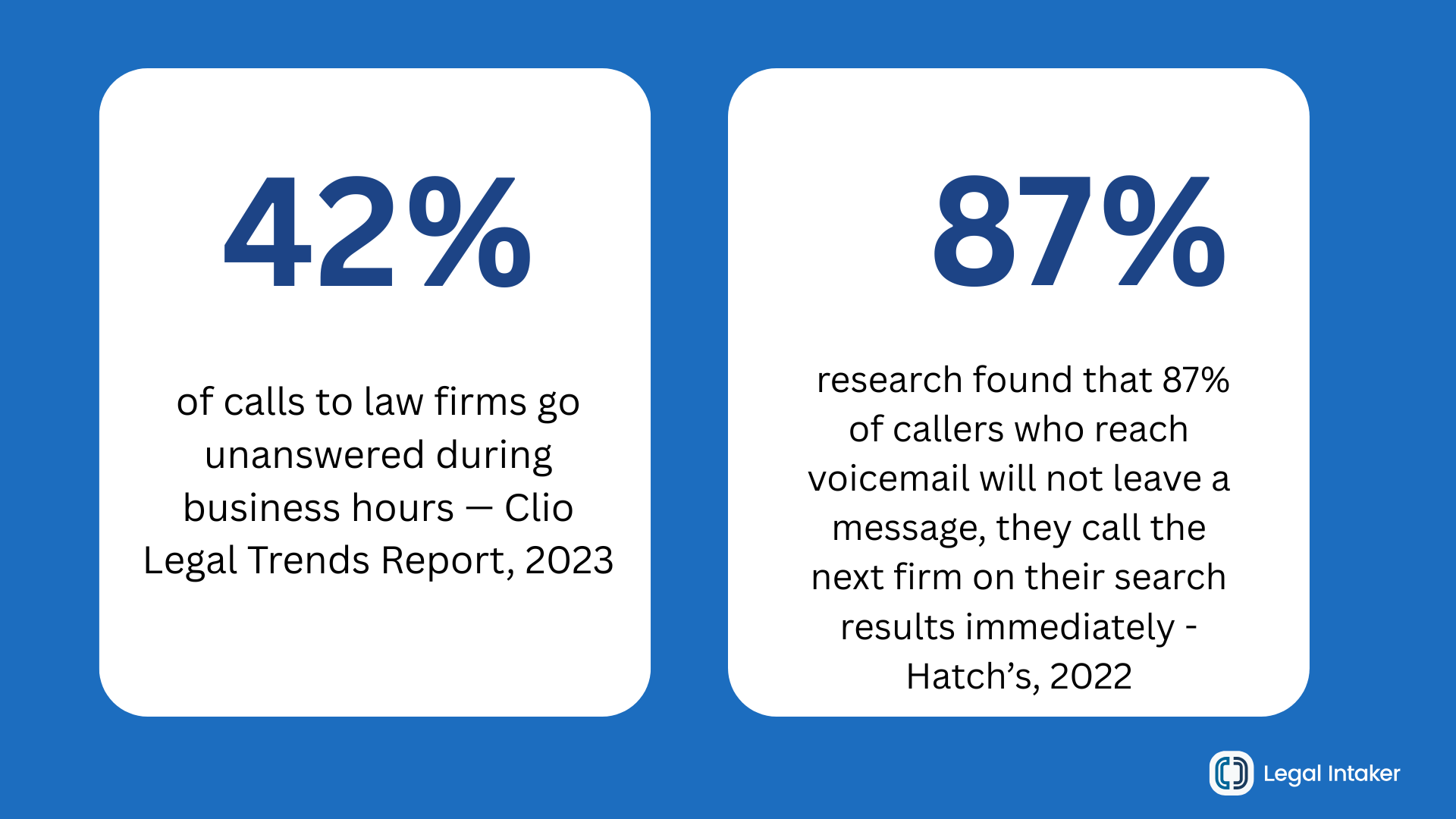
According to Clio's 2023 Legal Trends Report, 42% of calls to law firms go unanswered during business hours. Hatch's 2022 research found that 87% of callers who reach voicemail will not leave a message they call the next firm on their search results immediately. Legal intake phone services exist to close that gap. But the market is saturated, and the quality differences between service models are enormous. This guide gives law firm owners, legal marketers, and operations teams the framework to make a decision that actually moves conversion numbers.
What Are Legal Intake Phone Services And What Should They Actually Do?
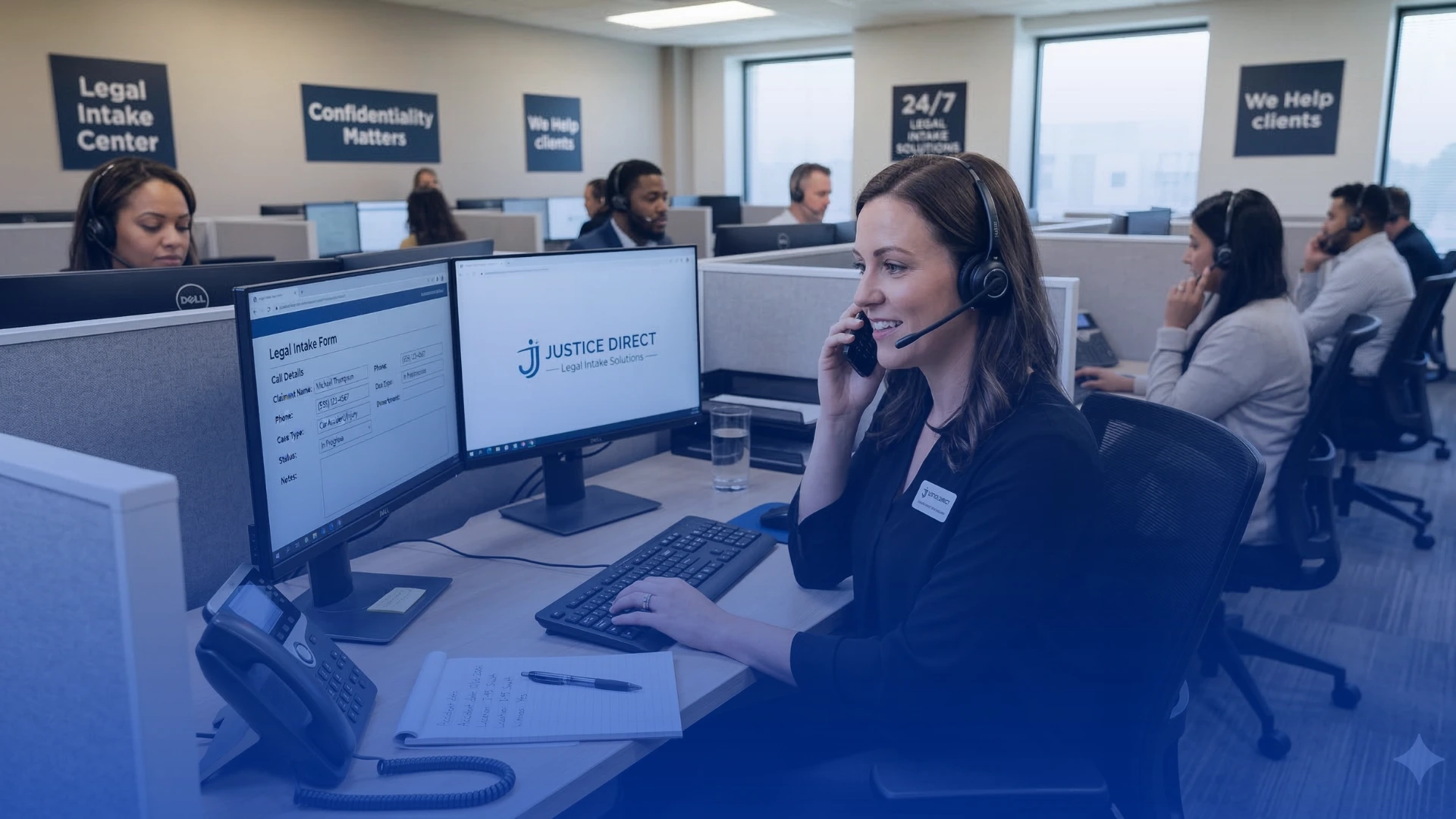
A legal intake phone service handles inbound client calls on behalf of your firm, conducts the initial contact with prospective clients, and manages the new client intake process before your attorneys need to be involved. That definition, however, covers a very wide range of quality and capability.
At the low end, you get a professional receptionist answering calls and taking messages. At the high end, you get trained legal intake professionals who conduct structured legal client intake interviews, screen calls for case viability, capture client data accurately in your case management systems, and schedule appointments all while following strict protocols around sensitive client information and client confidentiality.
The legal intake process typically includes:
• Answering calls and handling client inquiries promptly including after-hours and weekend coverage
• Gathering client details: name, contact information, incident summary, and relevant case facts
• Screening calls to determine whether a matter aligns with the firm's specific practice areas
• Qualifying leads against intake criteria identifying high-value cases early in the initial contact
• Scheduling appointments and managing the client meeting pipeline
• Entering client data accurately into existing systems and case management platforms
• Handling client inquiries with empathy, professionalism, and consistent firm-branded language
The firms that treat this function as a critical part of their legal services infrastructure not an administrative task delegated to whoever picks up the phone are the firms that convert at the highest rates. Legal intake is not a receptionist function. It is a revenue function.
The Real Revenue Cost of an Unanswered Client Call
Most law firm owners think of a missed call as a minor inconvenience. The math tells a different story and legal marketers running marketing campaigns need to understand this dynamic too, because intake failure silently tanks the ROI of every dollar spent on legal marketing.
Here's a concrete example. A personal injury firm receives 200 inbound phone calls per month. At a 42% missed rate, 84 prospective clients never connect with the firm. If 20% of answered calls convert to a consultation, and 30% of those consultations result in a signed engagement that's roughly 5 cases per month lost entirely to an intake gap. At a conservative average PI attorney fee of $15,000 per case, that's $75,000 in unrecovered monthly revenue.
Now apply that logic to mass tort cases, class action lawsuits, or immigration law matters. The case values shift, but the dynamic is identical: every unaddressed client call is a direct hit to the firm's efficiency and bottom line.
A few more numbers worth knowing:
• 87% of callers who get voicemail will not leave a message they call the next firm immediately (Hatch, 2022).
• 65% of people prefer calling over filling out a contact form when seeking professional services (Invoca, 2023).
• Over 40% of legal intake calls arrive outside traditional business hours especially in personal injury, immigration law, and criminal defense (Ruby Receptionists, 2022).
• Small law firms are disproportionately affected: without a dedicated team, after-hours calls go entirely unanswered.
When you frame intake coverage as a revenue function rather than overhead, the investment calculus changes completely. Missing client calls is not a staffing inconvenience it is a structural problem in how the firm is built.
What Your Legal Intake Phone Service Needs to Deliver
Here is where most law firms get burned: they select a service based on price and availability, without evaluating whether the service can actually convert prospective clients into signed matters. These are the capabilities that separate high-performing intake coverage from an expensive answering machine:
If the service you are evaluating cannot check every row in that table, you are purchasing coverage not intake quality. Those are meaningfully different products.
The 4 Types of Legal Intake Services Where Each One Performs and Where It Breaks Down
Understanding the difference between intake service models is the most consequential decision in this evaluation. Each type has a different performance ceiling, a different cost structure, and a different fit for different types of legal practices.
1. Automated and AI-Powered Answering
Automated systems are low cost and scalable. They handle appointment scheduling, basic FAQ routing, and callback requests without issue. But they fall apart the moment a call requires empathy, legal judgment, or nuanced information gathering.
For law firms managing complex intake personal injury, mass tort, immigration automation at first touch is a conversion killer.
2. General Virtual Receptionist Services
General virtual receptionists like Ruby Receptionists, PATLive, and Davinci answer calls with a polished, branded tone. The client experience feels professional. The limitation is straightforward: these are not legal intake professionals. They use generic scripts, cannot qualify a matter against the firm's practice areas, and have no framework for screening calls against legal criteria. For firms whose only need is message-taking and scheduling, it may be sufficient. For personal injury, family law, immigration, or employment practices, it is not.
3. Legal-Specific Answering Services
Providers like LEX Reception, Answering Legal, Back Office Betties, and Smith.ai deploy agents trained in legal terminology and practice-area-specific intake scripts. That's a meaningful upgrade over general virtual receptionists. The structural limitation worth understanding: these services operate on a shared-pool model.
The agent handling your call right now is simultaneously serving dozens of other law firms. That dilution affects consistency, familiarity with your intake criteria, and the depth of interaction possible in any single call.
4. Dedicated Virtual Legal Intake Specialists
A dedicated virtual legal intake specialist works exclusively for your firm. They learn your intake process, your practice areas, your CRM workflow, your qualifying scripts, and your tone. They are not splitting attention across dozens of other practices. They handle client calls the way a great in-house team member would with empathy, precision, and the firm-specific context that turns a phone call into a signed engagement.
For high-value matters like personal injury, mass tort, immigration, and family law, this model consistently outperforms shared answering services on intake conversion.
Shared Answering Service vs. Dedicated Virtual Legal Intake Specialist: A Direct Comparison
Put this table in front of your operations team or office manager before you finalize any intake decision.
A full-time in-house intake specialist in a major U.S. metro costs $45,000–$65,000 in base salary before benefits, payroll tax, PTO, training, and turnover risk. A virtual legal intake specialist placed through a staffing partner delivers the same function often with more focused expertise in legal services at significantly lower total cost while improving firm's efficiency across the board.
For a small law firm or a practice that's scaling toward a second location, that cost-effective solution is a structural advantage not just an operational convenience.
Is Your Firm Losing Client Calls Right Now? Run This 5-Minute Intake Audit
Before committing to any service or staffing model, take five minutes to run this internal audit. You only need your phone system data and a clear look at your intake process.
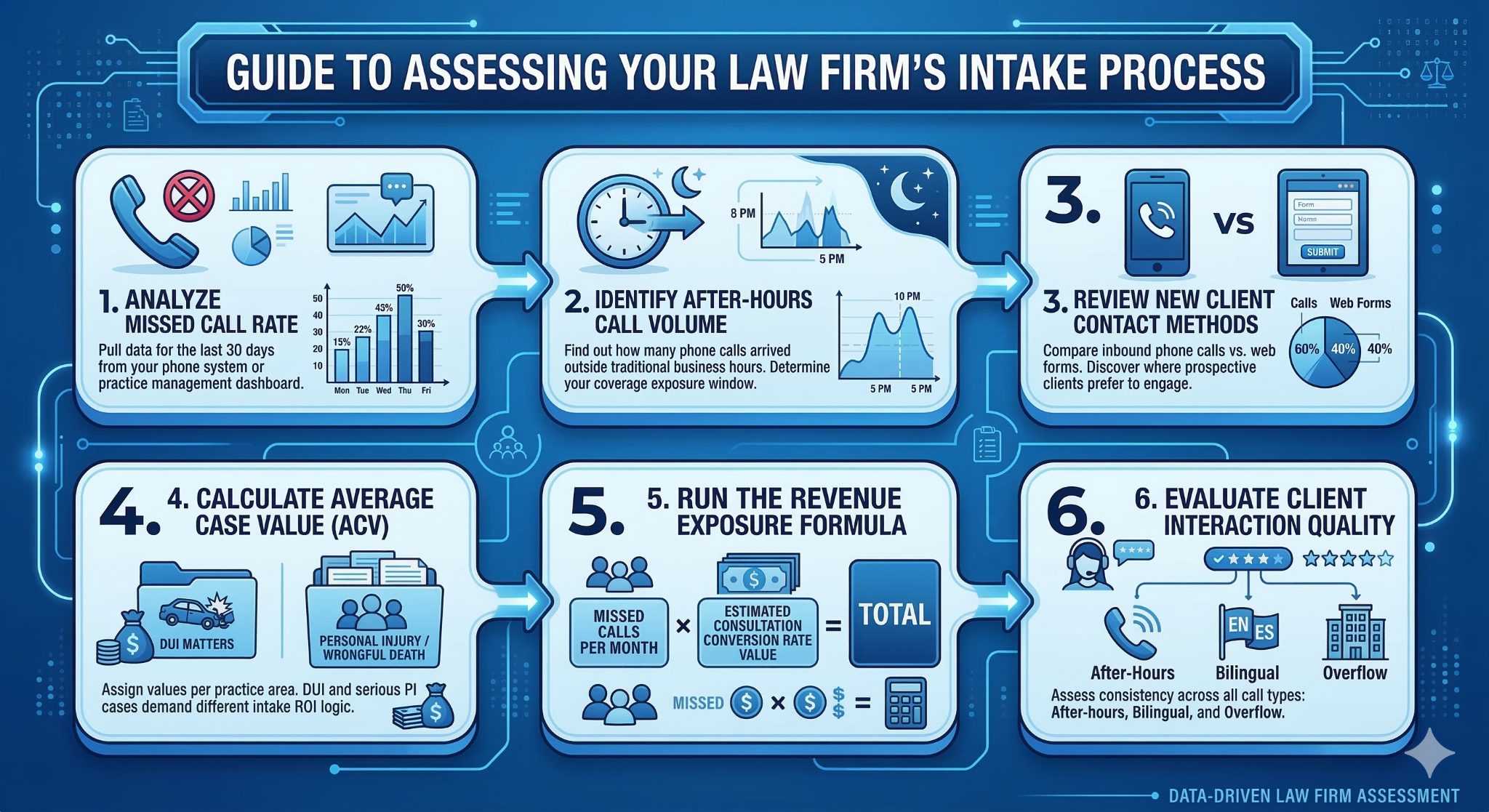
If your monthly revenue exposure clears $10,000 and for personal injury, mass tort cases, immigration law, or class action lawsuits, it almost certainly will you have a clear business case for upgrading your legal intake services. The payback period on a dedicated intake specialist is typically less than one signed case. That makes it one of the clearest cost-effective solutions available to a law firm investing in client management infrastructure.
Your Intake Process Is Either Capturing Revenue or Losing It There Is No Middle Ground
Every unanswered client call is a decision your firm is making, whether you realize it or not. Not an accident a structural gap that sends prospective clients directly to your competitors. Legal intake phone services solve that problem, but only if the model you choose is actually built to serve clients at the level your practice requires.
A shared answering service handling your calls between 100 other law firms is coverage. A dedicated legal intake professional who knows your firm, your cases, your intake criteria, and your tone is infrastructure. That distinction is the difference between scaling client engagement and patching a revenue leak with a band-aid solution.
Legal Intaker places pre-vetted virtual legal intake specialists with law firms across the U.S. trained in your firm's specific practice areas, integrated into your existing systems, and delivering the exceptional service every prospective client deserves at first contact. Book a free staffing consultation and we'll assess your call volume, practice areas, and intake gaps then match you with a dedicated specialist who works as a team member, not a vendor managing 100 other clients.
Stop losing qualified leads to an empty phone line.Talk to Legal Intaker Today!

FAQs About Legal Intake Phone Services
What is a legal intake phone service?
A legal intake phone service manages inbound client calls on behalf of a law firm and handles the new client intake process. The term covers a broad range from general virtual receptionists to dedicated legal intake professionals. The best services go beyond answering calls, screening for case qualification and entering data directly into your systems.
How much does a legal answering service cost for law firms?
Pricing depends on the model. General virtual receptionist services run $200–$600/month; legal-specific answering services average $300–$1,000+ depending on call volume and coverage hours. Dedicated virtual legal intake specialists typically fall between $1,500–$3,500/month still far less than a full-time in-house hire.
Do legal intake phone services handle calls outside traditional business hours?
Most legal-specific answering services offer 24/7 coverage as a standard feature. After-hours intake is especially critical for personal injury, criminal defense, immigration, and family law where calls often follow an urgent incident. Over 40% of legal intake calls arrive outside business hours, making after-hours coverage a non-negotiable for most practices.
What is the difference between a legal answering service and a virtual legal intake specialist?
A legal answering service routes calls through a shared pool of agents serving dozens of other law firms at the same time. A virtual legal intake specialist works exclusively for your firm learning your intake process, case criteria, and systems. The specialist model delivers stronger screening, higher-quality client interaction, and better conversion at a fraction of the cost of a full-time hire.


.png)
.png)












.webp)














.webp)

.webp)









.webp)