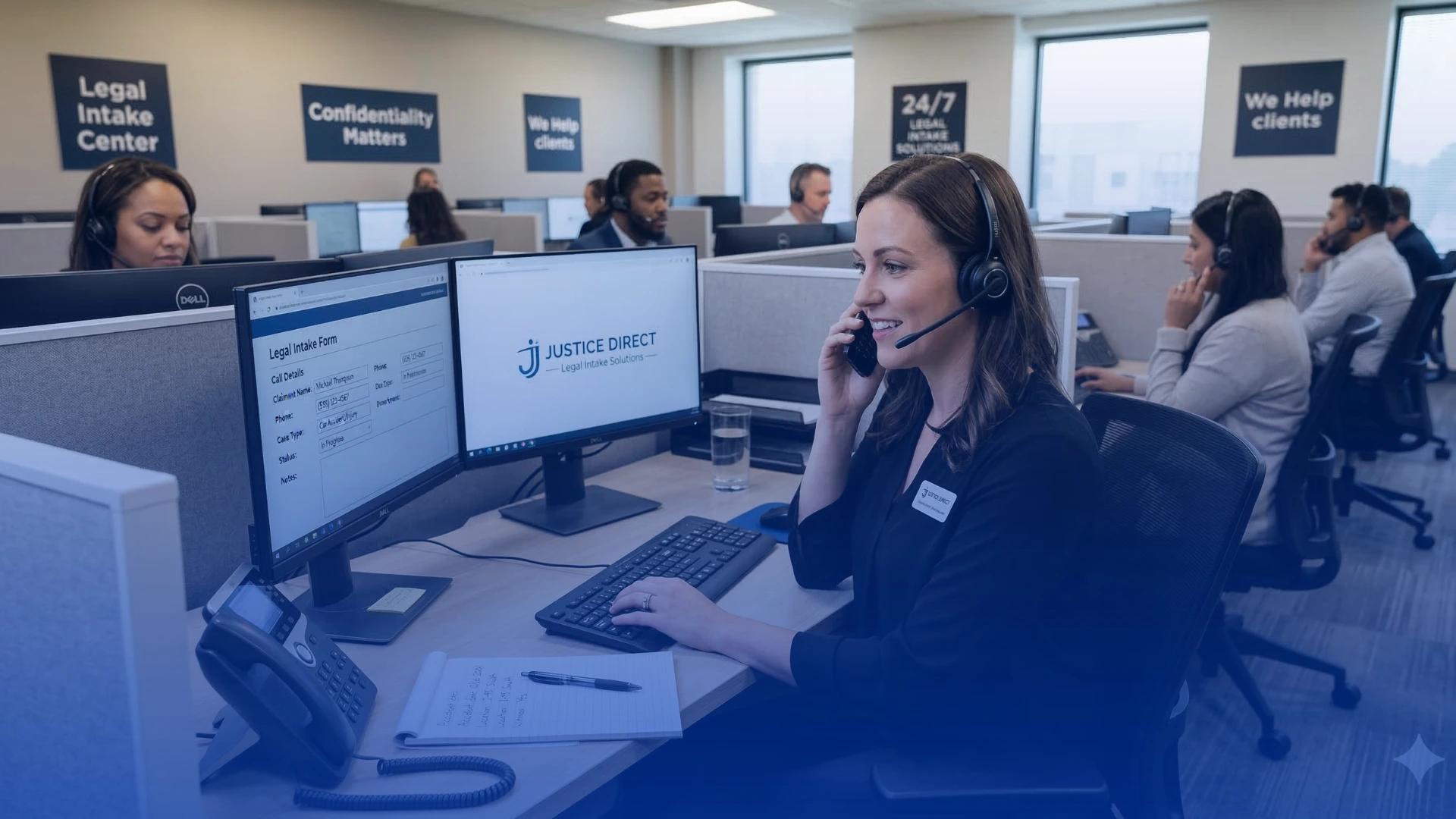
A virtual receptionist is a remote professional or service that answers your law firm's calls, greets callers in your firm's name, and handles front-desk work like screening potential clients, booking consultations and routing urgent matters. For law firms, the best virtual receptionists do more than take messages: they run your intake.
The stakes are high. In a CallRail survey of 1,000 U.S. consumers, 78% said they had abandoned a business after a call went unanswered. For a law firm, that caller is often a case that signs with the next firm on the list.
This guide explains the types of virtual receptionist services, what each costs compared with an in-house hire, the ethics rules that apply, and how to choose the right fit for your practice. For the wider picture, see our complete guide to legal answering services.
What Does a Virtual Receptionist Do for a Law Firm?
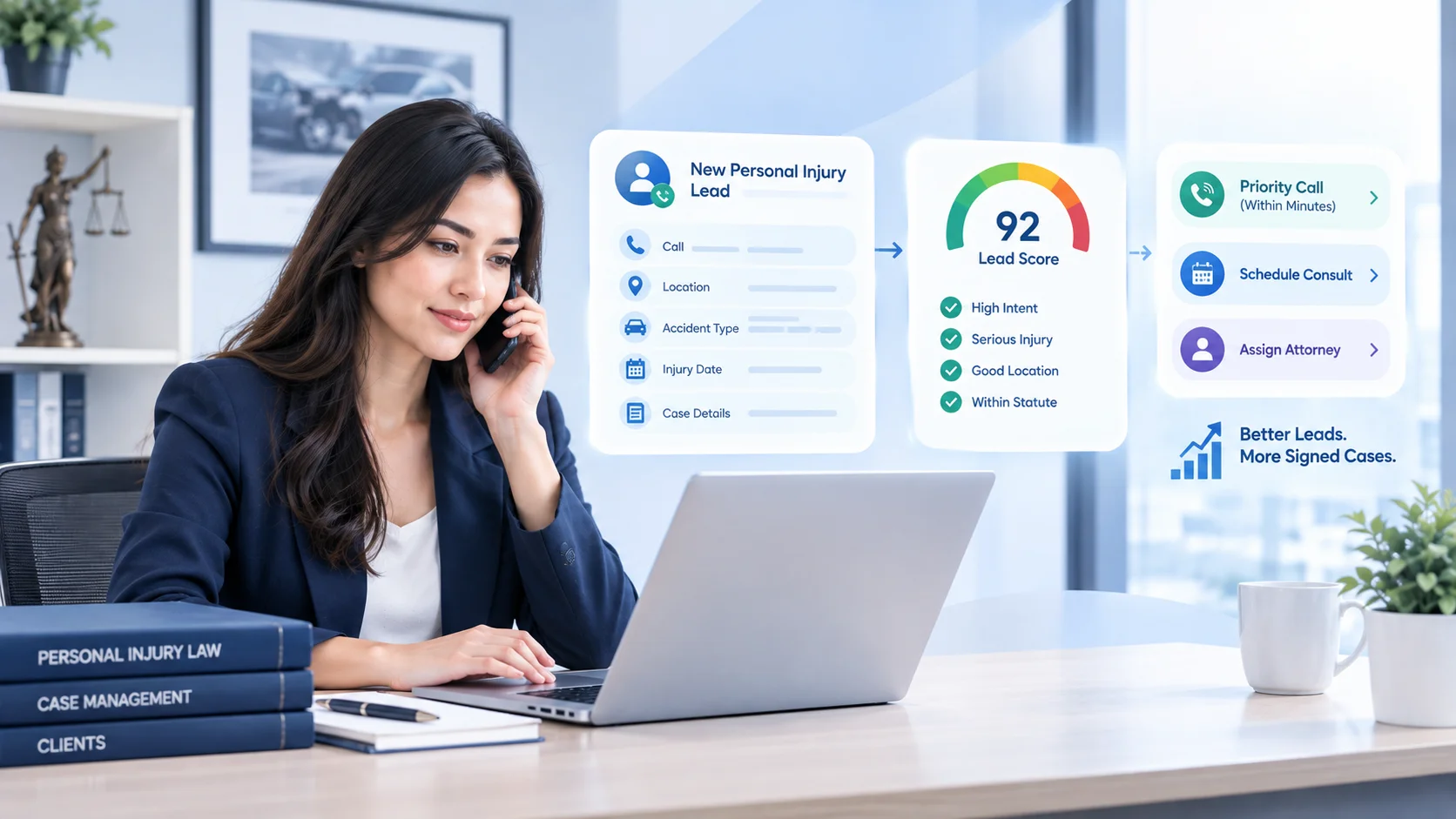
A virtual receptionist for law firms handles the calls and intake work that pull attorneys and paralegals away from billable time. Typical tasks include:
- Answering every call in your firm's name with an approved greeting
- Screening potential clients by practice area, jurisdiction and case type
- Collecting intake details such as contact information, key dates and opposing party names for conflict checks
- Booking consultations directly in your calendar
- Routing urgent matters, such as a client who was just arrested or served, to the right attorney
- Entering leads into your CRM or case management system, like Clio, MyCase or Filevine
- Following up with leads who haven't booked or returned forms
- Answering in Spanish for firms that serve Spanish-speaking clients
A good legal virtual receptionist knows legal terminology and knows where the line sits: they gather facts and schedule, but questions that need legal judgment go to a lawyer.
Types of Virtual Receptionist Services for Law Firms
"Virtual receptionist" covers several very different services. Law firms usually choose between four options.
A shared answering service is built for volume, so its agents juggle calls for dozens of businesses. A dedicated virtual receptionist works as part of your team, which is why many firms call the role a virtual intake specialist. Read our comparison of an answering service vs intake specialist for more detail, and our breakdown of AI intake chatbots vs human intake specialists if you're weighing automation.
Virtual Receptionist Daily Tasks
A law firm virtual receptionist's day usually splits between live calls and the follow-up work around them. Mornings often bring the heaviest call volume, so the first hours go to answering new leads, screening them by practice area and booking consultations while overnight voicemails and web inquiries get returned. Afternoons shift toward entering intake notes into Clio, MyCase or Filevine, chasing leads who haven't signed or sent documents, and confirming the next day's consultations. Most work the firm's business hours in its time zone, with some covering evenings and weekends when firms need after-hours intake. The receptionists who do well here stay calm with upset callers, type clean notes while they talk, and know exactly which calls need an attorney right away.
How Much Does a Virtual Receptionist Cost?
Virtual receptionist cost depends on the pricing model as much as the rate, and the cheapest option on paper is not always the cheapest at your call volume.
What an in-house receptionist costs
The median receptionist wage was $18.27 an hour, or $38,010 a year, in May 2025, according to the U.S. Bureau of Labor Statistics. Benefits add more: they made up 30.0% of private-industry compensation costs in June 2026.
That puts one median receptionist at roughly $54,300 a year, or about $4,525 a month, before office space, equipment and the time it takes to recruit and train them.
Common virtual receptionist pricing models
Legal intake calls run long because good screening takes time, so per-minute bills grow quickly as your firm grows.
Break-even example: dedicated specialist vs per-minute service
A full-time dedicated virtual receptionist at $10 an hour costs about $1,733 a month (40 hours × 52 weeks ÷ 12). Published live receptionist plans run $3.45 to $5.00 per included minute as of November 2026.
The break-even point is about 500 minutes a month. Below it, a per-minute service can cost less; above it, a dedicated specialist costs less and also handles follow-ups, CRM entry and intake forms between calls.
Ethics and Confidentiality Rules for Legal Receptionists
Any receptionist who talks to your potential clients works under your supervision, whether they sit in your office or work remotely. Under ABA Model Rule 5.3, lawyers must make reasonable efforts to ensure nonlawyer assistance is compatible with their professional obligations.
ABA Formal Opinion 506 addresses intake directly: nonlawyers may handle intake tasks such as gathering information and running conflict checks, but they must not give legal advice. Build that line into your scripts, and give your receptionist a clear way to route legal questions to an attorney.
Personal injury and workers' compensation intake often involves medical records. When it does, ask whether your provider follows HIPAA-compliant processes and understand the HIPAA business associate rules that apply to vendors handling health information.
Virtual Receptionist by Practice Area
The right virtual receptionist knows the questions your practice area needs answered on the first call.
Personal injury
Personal injury leads call several firms, often right after an accident. A receptionist should capture the accident date, injuries, treatment and insurance details, and flag statute-of-limitations concerns for an attorney.
Immigration
Immigration callers often prefer Spanish and need a calm, clear process. A bilingual receptionist can collect case type, deadlines and prior filings in the caller's language.
Family law
Divorce and custody calls are emotional. Good family law intake takes empathy, careful screening for urgent safety issues and accurate conflict-check details on both spouses.
Employment and workers' compensation
These callers need quick screening. Employment law intake centers on key dates and employer details, while workers' compensation intake adds the injury report and treatment history.
Common Mistakes When Hiring a Virtual Receptionist
- Choosing on headline price alone. Per-minute plans look cheap until long intake calls push you past your bundle.
- Hiring a message taker when you need intake. If leads still need a callback to be screened, you've added a step, not removed one.
- Skipping escalation rules. Decide which calls go straight to an attorney, and script how to handle legal questions.
- Ignoring your clients' language. If many callers speak Spanish, an English-only service loses them on the first call.
- Following up without checking consent rules. Outbound calls and texts to leads must follow the TCPA. Read our guide to TCPA rules for law firm calls and texts.
How Legal Intaker Works as Your Virtual Receptionist
Legal Intaker connects U.S. law firms with dedicated virtual legal intake specialists who work exclusively for your firm. Every specialist is pre-vetted and trained by U.S.-based attorneys, and English- and Spanish-speaking specialists are available across personal injury, family, immigration, employment, workers' compensation and other practice areas.
Specialists work your firm's hours in your U.S. time zone, with evening, weekend or 24/7 coverage available. They work in tools like Clio, MyCase, Filevine, Smokeball and Salesforce. You can start in as little as 3 days, pricing starts at $10 an hour with no long-term contracts, and you pay nothing until you make a hire. More than 1,500 specialists have been placed with law firms.